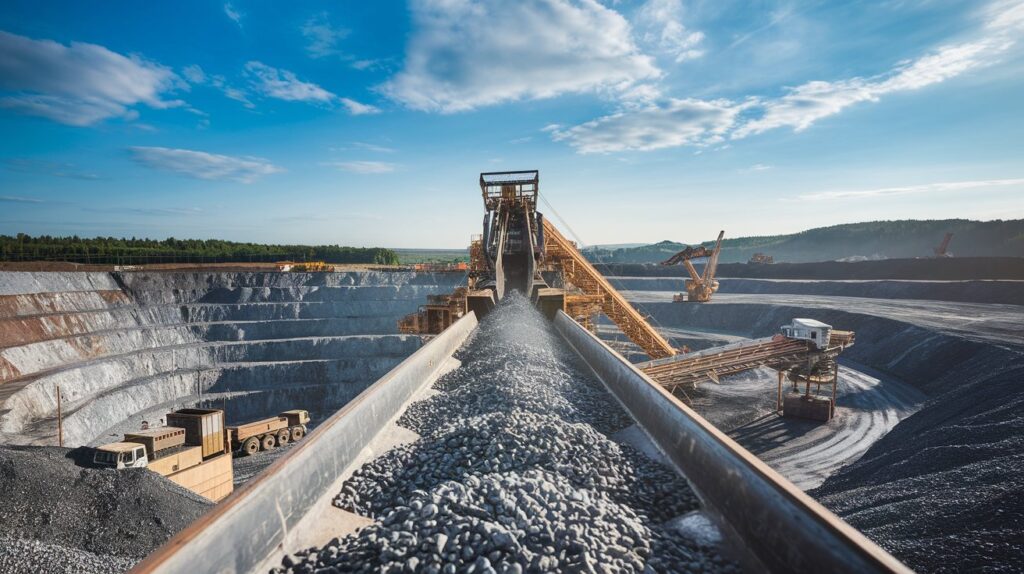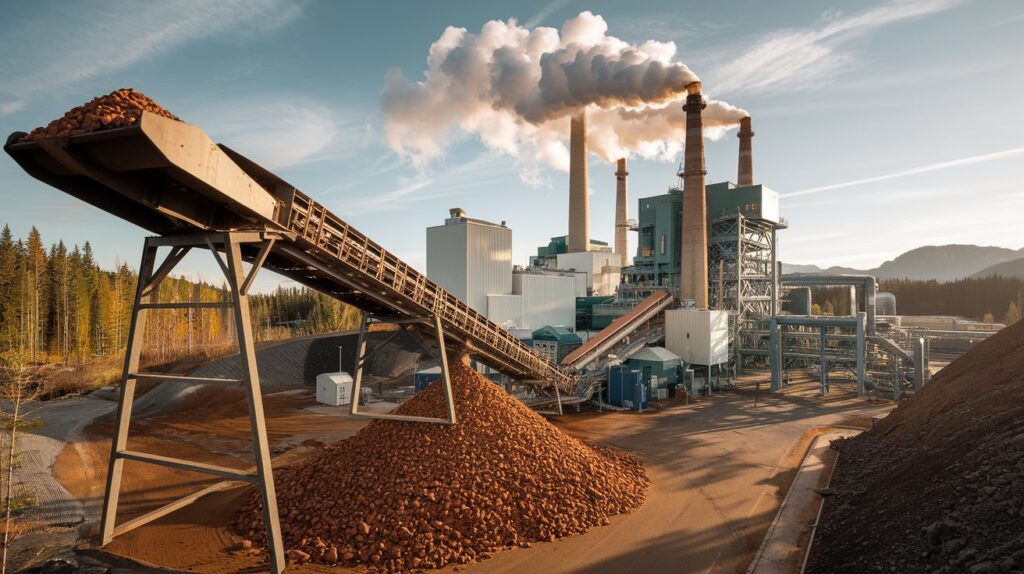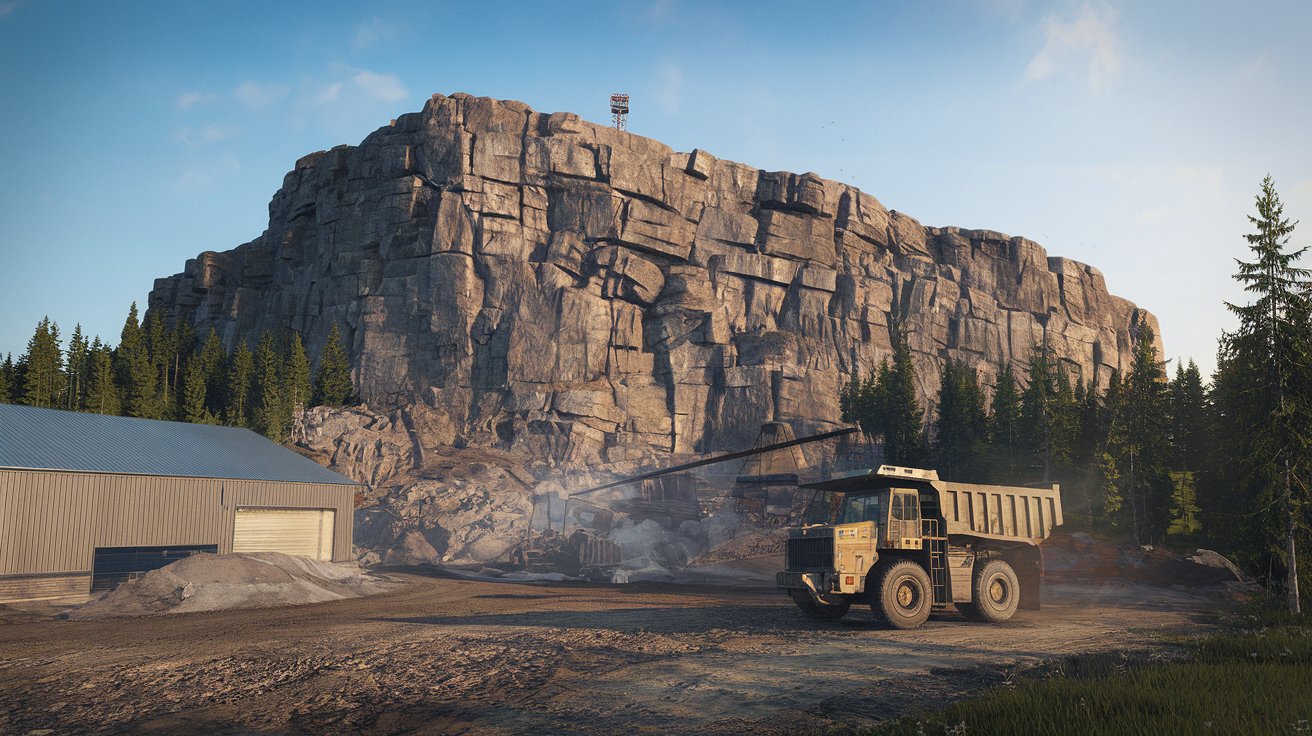
The Canadian Shield, one of the world’s oldest geological formations, contains some of North America’s richest mineral deposits. This vast region spanning over 8 million square kilometers hosts significant mining operations that extract gold, nickel, copper, iron ore, and rare earth elements. Understanding Canadian Shield mining is essential for investors, industry professionals, and anyone interested in North American resource extraction and its economic implications for both Canada and the United States market.
What Is the Canadian Shield and Why Is It Important for Mining
The Canadian Shield, also called the Laurentian Plateau, represents a massive exposure of Precambrian igneous and metamorphic rocks dating back 2.5 to 4 billion years. This ancient geological formation covers approximately 8 million square kilometers across central and eastern Canada, extending into northeastern Minnesota, Wisconsin, Michigan, and northern New York in the United States. The Shield’s importance stems from its exceptional mineral wealth, formed through billions of years of geological processes including volcanic activity, tectonic movements, and metamorphism that concentrated valuable ores into economically viable deposits.
The Canadian Shield is important because it hosts over 30% of North America’s known mineral reserves, making it a cornerstone of the continent’s mining industry. The region produces substantial quantities of gold, nickel, copper, zinc, iron ore, uranium, and diamonds, with annual production values exceeding $45 billion CAD as of 2026. For United States industries, the Canadian Shield represents a stable, nearby source of critical minerals essential for manufacturing, technology, defense, and renewable energy sectors. The geological stability and accessibility of these deposits make Canadian Shield mining operations among the most productive and economically significant in the world.
How Was the Canadian Shield Formed
The Canadian Shield was formed through a complex series of geological events spanning over 3 billion years. The foundation began during the Archean Eon (4 to 2.5 billion years ago) when volcanic island arcs collided and fused together through tectonic processes, creating the initial continental crust. Intense volcanic activity deposited massive amounts of lava and ash, which later metamorphosed into the greenstone belts that now host many of the Shield’s most valuable gold and base metal deposits. These greenstone belts, particularly those in the Abitibi region, contain some of the richest mining districts in North America.
Subsequent geological processes during the Proterozoic Eon (2.5 to 0.5 billion years ago) involved multiple mountain-building events, intrusions of magmatic bodies, and extensive erosion that exposed the ancient rocks visible today. The formation process included the creation of massive layered intrusions like the Sudbury Basin, formed by a meteorite impact 1.85 billion years ago, which became the world’s largest known nickel-copper-platinum deposit. Glaciation during the Pleistocene Epoch (2.6 million to 11,700 years ago) stripped away overlying sediments and carved the characteristic landscape of exposed bedrock, lakes, and thin soils. This glacial erosion actually benefited modern mining by exposing mineralized zones and creating natural geological maps that guide exploration efforts throughout the Canadian Shield mining districts.
Major Ores and Minerals Found in the Canadian Shield
The ores in the Canadian Shield represent an extraordinary diversity of metallic and non-metallic minerals formed through various geological processes. The region is particularly renowned for its precious metal deposits, with gold being the most economically significant. Major gold districts include the Abitibi Greenstone Belt (straddling Ontario and Quebec), Red Lake in Ontario, and Yellowknife in the Northwest Territories. These areas have collectively produced over 200 million ounces of gold and continue to yield approximately 5 million ounces annually as of 2026. The gold deposits typically occur in quartz veins, disseminated ore bodies, and volcanic-hosted massive sulfide systems.
Base metal ores constitute another critical component of Canadian Shield mining, with nickel, copper, and zinc being predominant. The Sudbury Basin in Ontario remains the world’s premier nickel-copper mining district, producing over 1.5 million metric tons of nickel and copper combined annually. The region also hosts significant zinc and lead deposits in volcanic-hosted massive sulfide systems, particularly in the Flin Flon and Snow Lake areas of Manitoba. Iron ore extraction from the Labrador Trough represents a massive operation, with annual production exceeding 50 million metric tons, primarily exported to United States steel mills in the Great Lakes region and international markets.
Precious Metals and Critical Minerals
Beyond traditional precious metals, the Canadian Shield has emerged as a crucial source of critical minerals essential for modern technology and renewable energy. Rare earth elements (REEs) deposits have been identified in multiple locations, with the Nechalacho deposit in the Northwest Territories containing significant reserves of heavy rare earths used in electric vehicle motors and wind turbines. The Shield also produces substantial quantities of platinum group metals (PGMs) as by-products of nickel-copper mining, with annual production of approximately 450,000 ounces combined platinum, palladium, and rhodium as of 2026, critical for automotive catalytic converters and hydrogen fuel cells.
The region’s uranium deposits in the Athabasca Basin of Saskatchewan represent the world’s highest-grade uranium ores, averaging 10-20% uranium oxide compared to the global average of 0.1-0.2%. These deposits supply approximately 15% of global uranium production, essential for both Canadian and United States nuclear power generation. Additionally, the Canadian Shield contains commercially viable deposits of lithium, cobalt, graphite, and vanadium, minerals increasingly demanded for battery production and energy storage systems. Several new mining projects initiated between 2024-2026 specifically target these critical minerals to supply the growing electric vehicle and renewable energy markets in North America.
Industrial Minerals and Gemstones
The Canadian Shield also produces valuable industrial minerals including high-purity silica, dimension stone, aggregates, and specialty minerals used in manufacturing and construction. The region’s granite, gabbro, and anorthosite deposits supply architectural stone markets throughout North America, with annual production values exceeding $800 million CAD. Dimension stone quarries in Quebec and Ontario provide distinctive Canadian granite used in monuments, buildings, and countertops across the United States, prized for its durability and aesthetic qualities.
A unique gemstone only found in Canada is Ammolite, an iridescent organic gemstone formed from fossilized ammonite shells found specifically in the Bearpaw Formation along the eastern slopes of the Rocky Mountains adjacent to the Shield. However, within the Shield proper, the region produces significant quantities of diamonds from kimberlite pipes in the Northwest Territories and Nunavut. Since the discovery of diamonds in the early 1990s, Canada has become the world’s third-largest diamond producer by value, with annual production of approximately 10-12 million carats as of 2026. These Canadian diamonds command premium prices in United States jewelry markets due to their ethical sourcing and conflict-free certification.
Canadian Shield Mining Map and Key Operating Districts
A Canadian Shield mining map reveals distinct metallogenic provinces, each characterized by specific mineral assemblages and geological settings. The Abitibi Greenstone Belt, spanning northeastern Ontario and northwestern Quebec, represents North America’s most prolific gold mining district, hosting over 100 past-producing and currently active mines. Major operations include the Detour Lake mine (producing 600,000+ ounces gold annually), the Kirkland Lake district, and the Val-d’Or-Malartic corridor. This region alone accounts for approximately 40% of Canadian gold production and attracts continuous exploration investment exceeding $500 million annually as of 2026.
The Sudbury Basin in Ontario constitutes one of the world’s most significant mining districts for nickel, copper, and platinum group metals. This 60-kilometer-long, 30-kilometer-wide elliptical structure contains dozens of ore bodies with proven reserves exceeding 1 billion metric tons of ore. Major operators including Vale, Glencore, and others maintain multiple underground and open-pit operations producing approximately 150,000 metric tons of nickel and 100,000 metric tons of copper annually. The Thompson Belt in northern Manitoba represents another major nickel district, while the Labrador Trough hosts massive iron ore operations at Labrador City and Schefferville. These mining districts collectively employ over 75,000 workers directly and support extensive supply chains extending into the United States, particularly Michigan, Minnesota, and Wisconsin, where equipment manufacturing, refining, and transportation services are concentrated.
Emerging Mining Areas and Exploration Targets
Beyond established districts, exploration activities across the Canadian Shield have identified promising new mining areas, particularly for critical minerals. The Ring of Fire region in northern Ontario’s James Bay Lowlands contains significant chromite deposits (estimated 30+ million metric tons) essential for stainless steel production, along with nickel, copper, and platinum group metals. Despite infrastructure challenges, development planning has advanced considerably since 2024, with projected production potentially beginning by 2028-2029, pending regulatory approvals and First Nations agreements.
The Athabasca Basin continues to reveal new high-grade uranium discoveries, with exploration companies identifying multiple targets that could extend the region’s position as the world’s premier uranium district for decades. In Quebec’s Eeyou Istchee James Bay region, the discovery of high-grade lithium deposits has sparked intense exploration activity, with several projects advancing toward production to supply the North American battery manufacturing sector. These emerging mining areas represent billions of dollars in potential development investment and could significantly expand the Canadian Shield’s contribution to United States supply chains for critical minerals by 2030.
What Is the Major Industry in the Canadian Shield
The major industry in the Canadian Shield is unequivocally mining and mineral extraction, which has been the economic foundation of the region for over a century. As of 2026, the mining sector contributes approximately $55-60 billion CAD annually to the Canadian economy, with the Canadian Shield accounting for roughly 75% of this value. This industry encompasses exploration, extraction, processing, and related support services, employing over 400,000 people directly and indirectly across the region. For many communities in the Shield, particularly remote northern settlements, mining operations represent the primary or sole significant employer and economic driver.
Beyond direct extraction, the mining industry has spawned substantial secondary and tertiary sectors including equipment manufacturing, specialized transportation, geological and engineering consulting, environmental services, and mineral processing technologies. Cities like Sudbury, Timmins, Val-d’Or, and Thunder Bay have developed diversified economies built on mining expertise, hosting research institutions, technical colleges, and innovation centers focused on mining technology. The industry’s importance extends to United States markets through extensive trade relationships, with Canadian Shield mines supplying approximately 25-30% of minerals consumed by American manufacturing sectors. The metals and minerals extracted from the Shield are essential inputs for United States automotive, aerospace, construction, electronics, and defense industries, making this Canadian mining industry strategically important for North American economic security.
Canadian Shield Climate and Its Impact on Mining Operations
The Canadian Shield climate is characterized by extreme seasonal variations, with continental subarctic and humid continental climate zones predominating across the region. Winter temperatures commonly drop to -30°C to -40°C (-22°F to -40°F) across much of the Shield, with the northern portions experiencing even colder conditions and prolonged periods of darkness. Summer temperatures typically range from 15°C to 25°C (59°F to 77°F), creating a short growing season of 60-100 days. Annual precipitation varies from 400mm to 1000mm (16-40 inches), with significant portions falling as snow, creating snow covers exceeding 2 meters (6.5 feet) in depth during winter months.
These climate conditions significantly impact mining operations in multiple ways. Winter creates challenges for surface mining, requiring heated enclosures for equipment, specialized lubricants and fuels, and continuous snow removal operations. However, the frozen ground also enables ice road construction, providing cost-effective transportation access to remote mines during winter months when summer routes would be impassable through muskeg and wetlands. Many Canadian Shield mining operations have adapted through predominantly underground mining methods, which maintain relatively stable temperatures year-round. Modern operations invest heavily in climate-controlled facilities, remote operation technologies, and fly-in/fly-out workforce models to overcome seasonal limitations. For United States companies operating or investing in Canadian Shield mines, understanding these climate-related operational considerations is essential for accurate cost modeling and production planning.
Environmental Considerations and Sustainable Mining Practices
Environmental stewardship in Canadian Shield mining has evolved significantly, with modern operations implementing comprehensive environmental management systems addressing acid mine drainage, tailings storage, habitat disruption, and greenhouse gas emissions. The Shield’s numerous lakes and waterways require careful management to prevent contamination, with strict federal and provincial regulations governing effluent discharge, water quality monitoring, and aquatic ecosystem protection. As of 2026, all major mining operations must conduct extensive environmental impact assessments and implement mitigation measures before receiving operational permits.
Sustainable mining practices increasingly incorporate circular economy principles, with companies recovering and recycling process water, rehabilitating disturbed lands concurrently with operations, and developing biodiversity offset programs. The implementation of electric mining equipment, renewable energy integration (particularly hydroelectric power), and advanced ore processing technologies has reduced the carbon intensity of Canadian Shield mining by approximately 22% since 2020. Several operations now achieve carbon-neutral status through a combination of electrification, energy efficiency improvements, and verified carbon offset purchases. These environmental practices align with growing demands from United States purchasers and investors for responsibly-sourced minerals, particularly in sectors like automotive and electronics manufacturing where supply chain sustainability increasingly influences procurement decisions.
Reclamation and Long-Term Land Management
Mine reclamation in the Canadian Shield involves restoring lands to self-sustaining ecosystems capable of supporting native vegetation and wildlife. Progressive reclamation approaches now integrate Indigenous traditional knowledge with scientific methods to achieve restoration outcomes that respect cultural values and ecological functions. Companies are legally required to post financial assurance (reclamation bonds) to ensure adequate funding for closure activities, with total bonded amounts across the Shield exceeding $8 billion CAD as of 2026.
Successful reclamation projects have transformed former mining sites into productive forests, wetlands, and recreational areas. The development of engineered soil covers, strategic revegetation with native species, and long-term monitoring programs ensures that closed mine sites do not pose ongoing environmental risks. Some reclaimed mining lands have been repurposed for alternative economic uses including forestry, tourism, and renewable energy generation. For United States-based mining companies and investors, understanding Canadian reclamation standards is crucial, as similar requirements are increasingly being adopted across North American jurisdictions, and Canadian Shield operations often represent best-practice examples for closure planning and execution.
Economic Impact on United States Markets and Trade
The economic relationship between Canadian Shield mining and United States markets is extensive and multifaceted. Approximately 65-70% of minerals and metals produced in the Canadian Shield are exported, with the United States receiving roughly 75% of these exports by volume and value. This translates to approximately $25-30 billion USD annually in mineral commodities flowing to American manufacturers, processors, and end-users. The proximity of the Shield to major United States industrial centers in the Great Lakes region, Northeast, and Upper Midwest provides logistical advantages, reducing transportation costs and supply chain risks compared to overseas sources.
Key mineral exports to the United States include iron ore for steel production (primarily to mills in Indiana, Ohio, and Pennsylvania), nickel and copper for automotive and electronics manufacturing, gold for jewelry and investment markets, and increasingly, critical minerals like lithium and rare earths for battery and technology applications. The integrated nature of North American supply chains means that disruptions in Canadian Shield mining operations directly impact United States manufacturing capacity and pricing. For example, labor disputes or production curtailments at major Sudbury nickel operations have historically caused price spikes affecting American stainless steel producers. This interdependence has led to strategic partnerships between United States companies and Canadian miners, joint venture arrangements, and significant American investment in Canadian Shield exploration and development projects.
Investment Opportunities and Cross-Border Collaboration
United States investors have increasingly recognized Canadian Shield mining assets as strategic investments offering portfolio diversification, exposure to critical minerals, and stable jurisdictional risk profiles. Major American institutional investors, including pension funds, sovereign wealth vehicles, and specialized mining investment firms, hold significant stakes in Canadian mining companies operating Shield properties. The Toronto Stock Exchange and TSX Venture Exchange list hundreds of exploration and production companies focused on Canadian Shield properties, providing accessible investment vehicles for United States capital.
Cross-border collaboration extends beyond financial investment to include technology partnerships, research cooperation, and workforce development initiatives. United States mining equipment manufacturers maintain strong relationships with Canadian Shield operations, which serve as testing grounds and showcases for innovative technologies including autonomous mining equipment, advanced ore processing systems, and environmental monitoring solutions. Universities and research institutions on both sides of the border collaborate on mining-related research addressing challenges specific to Shield geology and operating conditions. These collaborative relationships strengthen North American mining competitiveness globally and ensure technology development addresses the practical needs of modern, sustainable mining operations.
Indigenous Communities and Resource Development
Indigenous peoples have inhabited the Canadian Shield for over 10,000 years, and their communities, rights, and interests are central considerations in modern mining development. Approximately 200 First Nations communities are located within or adjacent to the Canadian Shield mining region, and Canadian law requires meaningful consultation and, increasingly, free, prior, and informed consent for projects affecting Indigenous territories and rights. As of 2026, impact and benefit agreements (IBAs) between mining companies and Indigenous communities are standard practice, providing employment preferences, business opportunities, revenue sharing, environmental co-management, and cultural protection measures.
Many Indigenous communities have become active participants and partners in mining development, moving beyond consultation to equity ownership, joint ventures, and independent mining operations. Several First Nations have established mining service companies, providing transportation, catering, environmental monitoring, and technical services to operations in their territories. Progressive mining companies recognize that building genuine partnerships with Indigenous communities reduces project risks, improves social license to operate, and brings valuable traditional knowledge to environmental management and land stewardship. For United States companies investing in or sourcing from Canadian Shield mines, understanding and respecting Indigenous rights and partnership models is essential for ethical operations and represents an evolving best practice applicable to mining projects globally.
Technological Innovation in Canadian Shield Mining
The Canadian Shield mining sector has emerged as a global leader in adopting and developing advanced technologies to address operational challenges including deep mining, remote locations, harsh climate, and workforce constraints. Automation and remote operations technologies are widely deployed, with several operations utilizing autonomous haul trucks, remotely operated load-haul-dump equipment, and tele-remote drilling systems that allow operators to work from surface control centers rather than underground. These technologies improve safety, increase productivity, and make operations viable in locations where traditional labor-intensive methods would be uneconomical.
Advanced ore processing and metallurgical technologies have been developed specifically for Canadian Shield ore types, including selective flotation circuits for complex polymetallic ores, pressure oxidation systems for refractory gold ores, and hydrometallurgical processes for nickel laterites and sulfides. Digital technologies including artificial intelligence for ore grade prediction, machine learning for predictive equipment maintenance, and integrated mine planning systems optimize operations in real-time. Several Canadian Shield operations serve as testbeds for emerging technologies including battery-electric underground equipment, which eliminates diesel emissions and reduces ventilation requirements, potentially enabling deeper, more economic mining. United States technology companies collaborate extensively with Canadian miners to develop and commercialize these innovations, which subsequently find application in mining operations globally.
Exploration Technologies and Geological Innovations
Mineral exploration in the Canadian Shield employs cutting-edge geophysical, geochemical, and geological technologies to identify buried ore bodies beneath glacial overburden, lakes, and significant depths. Advanced airborne geophysical surveys using electromagnetic, magnetic, and radiometric sensors can detect mineralized zones through hundreds of meters of cover. Deep-penetrating seismic surveys, originally developed for petroleum exploration, are increasingly applied to map geological structures and lithological contacts at depths exceeding 2 kilometers, opening entirely new exploration targets.
Machine learning algorithms now analyze vast datasets combining geological, geochemical, geophysical, and historical exploration information to identify prospective areas and predict ore deposit locations with increasing accuracy. Drill technologies including directional drilling and coiled tubing systems enable more efficient testing of exploration targets, reducing costs and environmental impacts. Genomic technologies analyzing microbial communities in soils can detect subtle geochemical signatures of buried mineralization. These exploration innovations are essential for discovering the next generation of Canadian Shield deposits, as surface and near-surface deposits have been largely identified, and future discoveries will predominantly be concealed deposits requiring sophisticated detection methods. United States exploration companies and technology providers actively participate in this innovation ecosystem, both as service providers and as practitioners applying these methods in Shield exploration programs.
Future Outlook for Canadian Shield Mining Industry
The future of Canadian Shield mining appears robust, driven by increasing global demand for metals essential to electrification, renewable energy, and advanced manufacturing. Projections indicate that production of critical minerals including lithium, nickel, cobalt, copper, and rare earth elements could increase by 200-400% by 2035 to meet electric vehicle and energy storage demands. The Canadian Shield is well-positioned to capture significant portions of this growth, given its geological endowment, established mining expertise, stable jurisdiction, and proximity to United States consumption markets.
However, the industry faces significant challenges including increasing depths of economically viable deposits, infrastructure deficits in remote areas, labor shortages, regulatory complexity, and the imperative to operate with minimal environmental impact and maximum social benefit. Addressing these challenges will require continued technological innovation, substantial capital investment (estimated at $75-100 billion CAD through 2035), workforce development initiatives, and collaborative approaches involving governments, companies, Indigenous communities, and other stakeholders. The transition toward lower-carbon mining operations will accelerate, with electrification of equipment, renewable energy integration, and potentially carbon capture technologies becoming standard rather than exceptional. For United States stakeholders, the Canadian Shield will remain a strategically important source of minerals, and maintaining strong bilateral trade, investment, and technological collaboration will be essential for North American economic competitiveness and supply chain security in an increasingly resource-constrained global economy.
Related video about canadian shield mining
This video complements the article information with a practical visual demonstration.
Your questions answered
What are the main ores found in the Canadian Shield?
The Canadian Shield contains diverse ore deposits including gold, nickel, copper, zinc, iron ore, uranium, and diamonds as primary commodities. Gold deposits are particularly abundant in greenstone belts like Abitibi, while the Sudbury Basin hosts world-class nickel-copper-platinum ores. The Labrador Trough contains massive iron ore deposits, and the Athabasca Basin holds the world’s highest-grade uranium. Additionally, the Shield produces significant quantities of critical minerals including lithium, rare earth elements, cobalt, and graphite essential for modern technologies and renewable energy systems. As of 2026, over 200 operating mines extract these diverse mineral resources across the Canadian Shield region.
Why is it called the Canadian Shield?
The formation is called the Canadian Shield because its shape on geological maps resembles a warrior’s shield, with a central core and extending margins. The name reflects both this distinctive outline and the region’s geological character as a stable, ancient craton forming the foundational ‘shield’ of the North American continent. The term was coined by early Canadian geologists in the late 19th century who recognized this vast exposed area of Precambrian rock as a distinct geological province. Alternative names include the Laurentian Shield or Laurentian Plateau, referencing the Laurentian Mountains in Quebec. The Shield represents one of Earth’s oldest and most stable continental regions, having remained relatively unchanged for billions of years.
How does Canadian Shield mining impact the United States economy?
Canadian Shield mining significantly impacts the United States economy by supplying 25-30% of minerals consumed by American manufacturing industries, valued at approximately $25-30 billion USD annually. These minerals are essential inputs for United States automotive, steel, aerospace, electronics, and defense sectors. The proximity of Canadian Shield mines to Great Lakes industrial centers provides logistical advantages and supply chain reliability compared to overseas sources. Additionally, United States companies invest billions in Canadian mining operations, equipment manufacturing for Shield mines supports American jobs, and integrated North American supply chains depend on consistent mineral flows from the Shield. Disruptions in Canadian Shield production directly affect United States manufacturing capacity and pricing, highlighting the strategic importance of this mining region.
What is the climate like in the Canadian Shield and how does it affect mining?
The Canadian Shield climate is characterized by extreme continental conditions with winter temperatures frequently dropping to -30°C to -40°C (-22°F to -40°F) and summer temperatures ranging from 15°C to 25°C (59°F to 77°F). This harsh climate creates operational challenges including frozen equipment, difficult surface transportation, and limited construction seasons. However, mining companies have adapted through predominantly underground operations that maintain stable temperatures, winter ice road construction for cost-effective transportation, and advanced technologies including heated facilities and remote operation systems. The climate actually provides some advantages, such as frozen ground enabling access to otherwise impassable areas and reduced environmental impacts during winter operations. Modern Canadian Shield mines operate year-round through specialized equipment, infrastructure investments, and workforce rotation models.
Who owns the mineral resources in the Canadian Shield?
Mineral resources in the Canadian Shield are owned by the Crown (government) in most areas, with provincial governments controlling approximately 90% of mineral rights and the federal government controlling rights in territories and certain federal lands. Private individuals or companies do not own the minerals themselves but acquire rights to explore and extract through licenses, claims, and leases granted by provincial or federal authorities. Indigenous communities increasingly assert rights and interests in mineral development through land claim agreements, treaty rights, and consultation requirements. Mining companies operate through various tenure systems including mining claims, mining leases, and surface rights, paying royalties and taxes to governments based on production. This public ownership model contrasts with some United States jurisdictions where private mineral ownership is more common, and ensures that mineral wealth theoretically benefits all Canadians through government revenues and regulated development.
What are the key Canadian Shield landmarks related to mining?
Key Canadian Shield landmarks related to mining include the Sudbury Basin, a 60-kilometer-long meteorite impact structure hosting world-class nickel-copper mines and visible from space; the Big Nickel monument in Sudbury, a 9-meter replica of a 1951 Canadian nickel coin celebrating the region’s mining heritage; and the Hollinger Open Pit in Timmins, one of Canada’s largest and richest gold mines that produced over 19 million ounces. The Polaris Mine site in Nunavut represents one of the world’s northernmost base metal operations. The Canadian Museum of Nature in Ottawa and various regional mining museums in Cobalt, Kirkland Lake, and Val-d’Or preserve mining artifacts and tell the history of Canadian Shield mining. Active operations like the Diavik and Ekati diamond mines showcase modern mining technology in remote northern environments. These landmarks represent both historical significance and ongoing importance of mining to Canadian Shield communities and economies.
| Mining Aspect | Key Details | Significance for U.S. Markets |
|---|---|---|
| Primary Commodities | Gold, nickel, copper, iron ore, uranium, diamonds, critical minerals | Supplies 25-30% of U.S. mineral consumption, essential for manufacturing |
| Annual Production Value | $55-60 billion CAD total mining sector contribution (2026) | $25-30 billion USD in annual exports to United States |
| Major Mining Districts | Abitibi Belt, Sudbury Basin, Labrador Trough, Athabasca Basin | Proximity to Great Lakes provides logistical advantages |
| Employment Impact | 400,000+ direct and indirect jobs across the region | Supports U.S. equipment manufacturers and service providers |
| Environmental Standards | Comprehensive regulations, 22% carbon intensity reduction since 2020 | Meets U.S. demand for responsibly-sourced minerals |
| Indigenous Partnerships | Impact benefit agreements, equity ownership, consultation requirements | Best practice model for ethical mining globally |
| Technology Innovation | Automation, electrification, AI-based exploration and operations | Collaboration opportunities for U.S. technology companies |
| Future Growth Sectors | Critical minerals for batteries, rare earths, advanced materials | Strategic importance for U.S. supply chain security through 2035 |