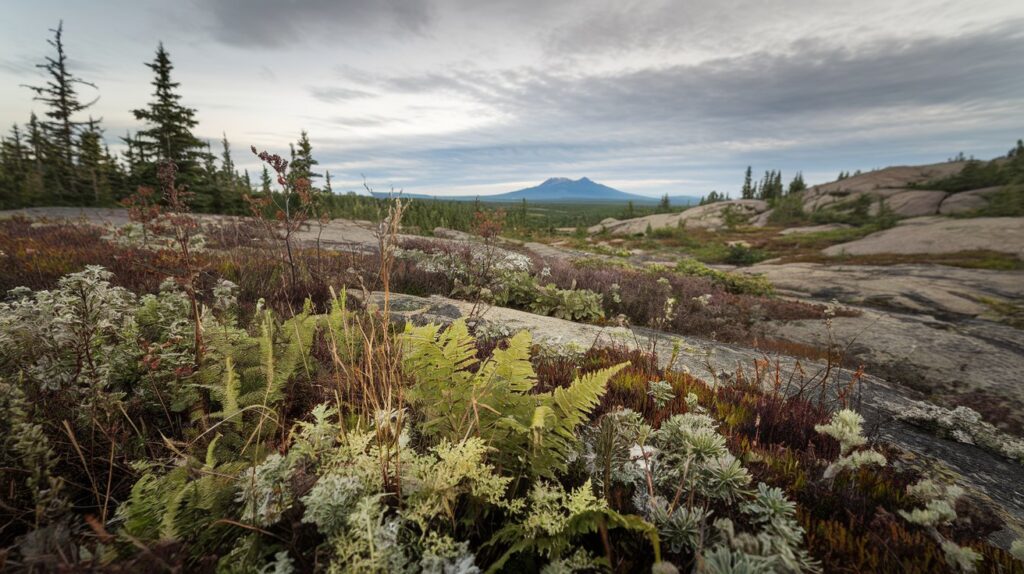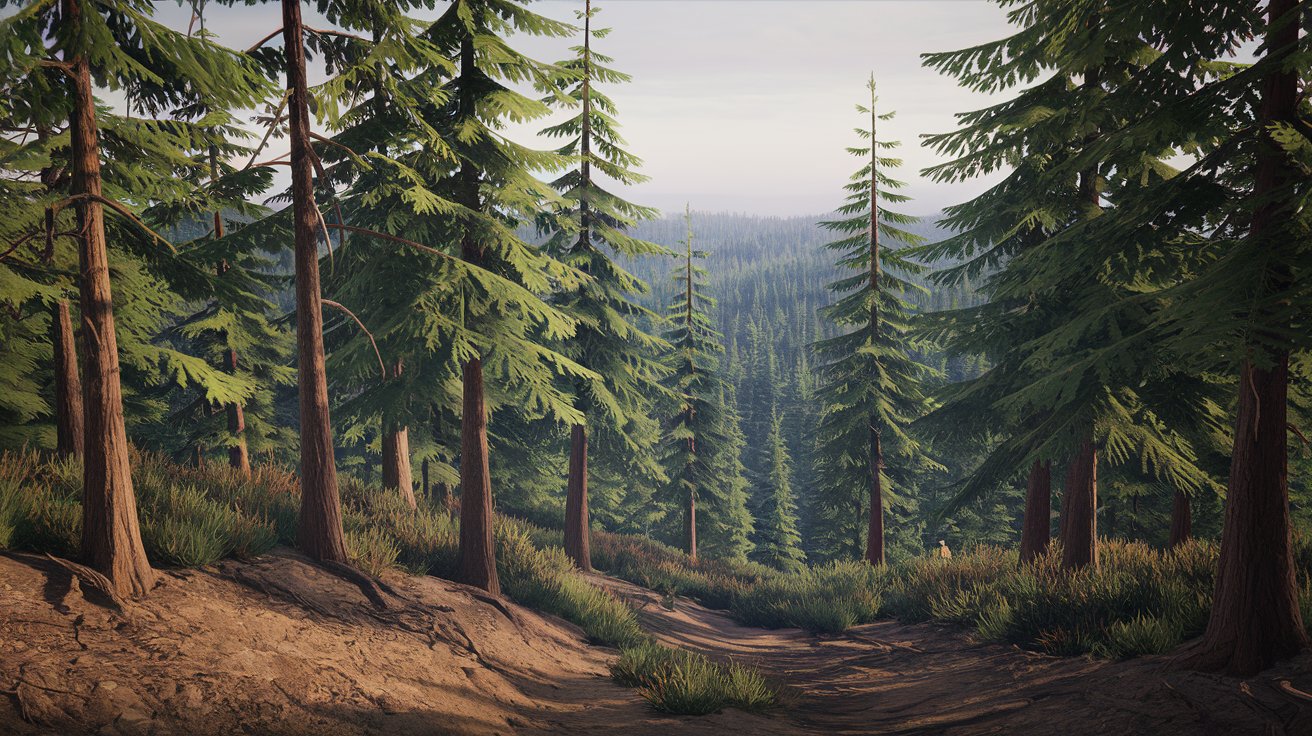
The Canadian Shield contains some of North America’s most distinctive vegetation, dominated by boreal forests and hardy plant species adapted to harsh climates. This ancient geological formation spans nearly 5 million square kilometers and supports unique ecosystems that have evolved over thousands of years. Understanding this vegetation is essential for anyone studying Canadian geography, ecology, or environmental science.
What Plants Grow in the Canadian Shield
The Canadian Shield vegetation consists primarily of coniferous trees that have adapted to survive long, cold winters and short growing seasons. Black spruce, white spruce, and jack pine dominate the landscape, while balsam fir thrives in moister areas. These plants have developed specialized features like needle-shaped leaves to minimize water loss and conical shapes to shed heavy snow. The understory includes hardy shrubs such as blueberry bushes, Labrador tea, and crowberry that provide essential food sources for wildlife.
Deciduous trees like white birch, trembling aspen, and balsam poplar grow in areas with better soil conditions and increased sunlight. These trees often colonize disturbed sites after forest fires, which occur naturally every 50-100 years in the Canadian Shield. The vegetation also includes various mosses, lichens, and fungi that play crucial roles in nutrient cycling and soil formation across this rocky terrain.
Types of Vegetation in the Canadian Shield
The Canadian Shield supports three main vegetation zones that vary based on latitude, elevation, and local climate conditions. Each type creates distinct ecosystems with specialized plant communities adapted to specific environmental challenges.
Boreal Forest (Taiga) Zone
The boreal forest represents the largest vegetation type, covering approximately 70% of the Canadian Shield region. This zone features dense stands of coniferous trees including black spruce, white spruce, jack pine, and tamarack. Tree heights typically range from 15-25 meters, with growth rates significantly slower than temperate forests due to the climate constraints. The forest floor contains thick layers of slowly decomposing needles that create acidic soil conditions, supporting specialized plant species like wintergreen, bunchberry, and various feather mosses.
Tundra Transition Zone
The northern portions of the Canadian Shield transition into tundra vegetation characterized by low-growing shrubs, grasses, sedges, and extensive lichen coverage. Trees become progressively smaller and more scattered, with stunted black spruce known as krummholz appearing as isolated clusters. This vegetation zone experiences permafrost conditions and extremely short growing seasons of 50-60 days. Arctic plants like dwarf birch, Arctic willow, cotton grass, and caribou lichen dominate the landscape, providing critical habitat for migratory species.
Mixed Forest Zone
The southern Canadian Shield contains mixed forest vegetation where coniferous species intermingle with deciduous trees. Eastern white pine, red pine, sugar maple, yellow birch, and red oak create diverse forest canopies that support greater biodiversity. These forests typically have richer soils and longer growing seasons of 120-150 days, allowing for more complex plant communities. The understory includes flowering plants such as trillium, wild ginger, and various fern species that thrive in the dappled sunlight beneath the canopy.
Canadian Shield Climate and Its Impact on Vegetation
The Canadian Shield climate directly shapes vegetation patterns through extreme temperature variations and precipitation patterns. Winter temperatures regularly drop below -30°C (-22°F), while summer temperatures reach 15-25°C (59-77°F), creating significant seasonal stress for plant communities. Annual precipitation averages 400-800mm, with considerable variation across the region. Northern areas receive less moisture, while southern sections experience higher rainfall that supports more diverse vegetation.
The growing season length critically determines which plant species can survive in different areas of the Canadian Shield. Southern regions enjoy 120-150 frost-free days, supporting mixed forests, while northern areas have only 50-70 days suitable for plant growth. This climate limitation explains why boreal conifers dominate, as they can photosynthesize efficiently during short growing periods. Recent climate data from 2026 indicates that average temperatures have increased by 1.5-2°C over the past three decades, gradually shifting vegetation zones northward at approximately 1-2 kilometers per year.
Vegetation in the Canadian Shield for Kids
Understanding Canadian Shield vegetation becomes easier when explained through accessible concepts that highlight the region’s unique characteristics. The shield can be imagined as a massive rocky area where tough plants have learned to survive harsh winters and rocky soil. These plants include evergreen trees that keep their needles all year, similar to Christmas trees, and include species like spruce, pine, and fir that form dense forests.
Young learners should know that Canadian Shield plants have special adaptations that help them survive. Trees grow slowly because the growing season is short, sometimes producing only a few centimeters of new growth each year. The forest floor contains blueberries, mushrooms, and colorful lichens that look like tiny forests growing on rocks. Many animals including moose, caribou, black bears, and wolves depend on this vegetation for food and shelter, making the Canadian Shield an important ecosystem for wildlife conservation.
Natural Resources in the Canadian Shield Vegetation
The vegetation of the Canadian Shield provides significant natural resources that support various industries while maintaining ecological integrity. Forestry represents a major economic activity, with sustainable harvesting of black spruce, jack pine, and balsam fir for lumber, pulp, and paper production. The Canadian forestry sector employs over 150,000 people in Shield regions, contributing approximately $24 billion annually to the national economy as of 2026 data.
Non-timber forest products include wild blueberries, cranberries, and medicinal plants that Indigenous communities and commercial operations harvest sustainably. Maple syrup production occurs in southern Shield regions, with Quebec alone producing 72% of the world’s supply from sugar maple trees. The vegetation also provides ecosystem services valued at over $100 billion annually, including carbon sequestration, water filtration, oxygen production, and habitat provision. Recent assessments indicate that Canadian Shield forests store approximately 12 billion tonnes of carbon, making their conservation critical for climate change mitigation.
Canadian Shield Wildlife and Vegetation Relationships
The wildlife of the Canadian Shield has evolved intricate relationships with the region’s vegetation that sustain complex food webs. Herbivores such as moose, caribou, white-tailed deer, and snowshoe hares rely directly on plants for nutrition, with moose consuming up to 30 kilograms of vegetation daily during summer months. Caribou depend heavily on lichens, particularly during winter when these organisms provide up to 90% of their diet, demonstrating the critical importance of seemingly simple plant forms.
Bird species utilize Canadian Shield vegetation extensively for nesting and feeding. Boreal chickadees, gray jays, and various warbler species nest in coniferous trees, while crossbills have specialized beaks adapted to extract seeds from spruce and pine cones. Larger predators including timber wolves, black bears, and lynx depend indirectly on vegetation through their prey species. The ecosystem supports over 300 bird species, 80 mammal species, and countless invertebrates that form interconnected communities shaped by the available plant resources and seasonal variations.
10 Important Facts About Canadian Shield Vegetation
First, the Canadian Shield contains the world’s largest intact boreal forest, covering approximately 3.5 million square kilometers with predominantly coniferous vegetation. Second, black spruce can live 200-300 years and remains the most common tree species across the region. Third, the shield experiences natural fire cycles every 50-100 years that rejuvenate forests and maintain ecosystem health. Fourth, tree growth rings in Shield forests average only 1-2mm annually due to harsh climate conditions, compared to 5-10mm in temperate regions.
Fifth, lichens in the Canadian Shield grow extremely slowly, adding only 1-3mm per year, yet some specimens exceed 4,000 years old. Sixth, the vegetation supports carbon storage equivalent to approximately 25% of Canada’s total forest carbon. Seventh, Indigenous peoples have sustainably harvested Shield plants for over 10,000 years for food, medicine, and materials. Eighth, peatlands within the Shield cover 1.2 million square kilometers, storing massive carbon reserves in partially decomposed plant matter.
Ninth, seed banks in Shield soils can remain viable for 50-100 years, allowing rapid regeneration after disturbances like fires. Tenth, climate change projections for 2026-2050 indicate vegetation zones will shift northward by 100-200 kilometers, fundamentally altering Shield ecosystems and requiring adaptive conservation strategies.
Canadian Shield Landmarks and Vegetation Features
Notable landmarks within the Canadian Shield showcase distinctive vegetation patterns that attract researchers and visitors. Pukaskwa National Park in Ontario preserves 1,878 square kilometers of pristine boreal forest along Lake Superior’s shore, featuring ancient white pines that exceed 300 years old. La Mauricie National Park in Quebec demonstrates classic Shield vegetation with mixed forests transitioning through successional stages from pioneer species to mature stands.
The Algonquin Provincial Park represents one of the most studied Shield ecosystems, containing over 1,000 plant species across 7,653 square kilometers. This landmark area features extensive sugar maple stands that create spectacular fall colors, attracting over 800,000 visitors annually. Temagami in northern Ontario contains some of the world’s oldest forests, with red and white pine trees exceeding 400 years old, providing valuable data on historical climate patterns through dendrochronology studies. These protected areas serve as crucial reference sites for understanding natural vegetation dynamics and guiding conservation efforts across the broader Canadian Shield region.
Vegetation Mapping and Geographic Distribution
Comprehensive vegetation maps of the Canadian Shield utilize satellite imagery, aerial surveys, and ground-truthing to classify plant communities with increasing precision. Remote sensing technology has advanced significantly by 2026, with multispectral and LiDAR data enabling identification of individual tree species and forest health indicators from space. These maps reveal distinct vegetation patterns correlating with bedrock geology, soil depth, elevation, and proximity to water bodies across the Shield’s vast expanse.
Geographic distribution patterns show boreal coniferous forests dominating 70% of the Shield area, mixed forests covering 15%, tundra transition zones comprising 10%, and wetlands occupying 5%. Provincial variations are significant, with Quebec’s Shield territory containing more balsam fir and paper birch, while Ontario sections feature greater jack pine and red pine coverage. Manitoba and Saskatchewan portions transition more abruptly to prairie vegetation at the Shield’s western edge. Modern mapping initiatives incorporate Indigenous ecological knowledge alongside scientific data, creating more nuanced understanding of vegetation patterns and their cultural significance to First Nations communities who have inhabited these lands for millennia.
Conservation Challenges and Vegetation Management
Contemporary conservation efforts face multiple challenges in protecting Canadian Shield vegetation while balancing economic development needs. Industrial forestry, mining operations, hydroelectric projects, and urban expansion create ongoing pressures on natural plant communities. Approximately 400,000 hectares of Shield forests are harvested annually, with reforestation efforts achieving variable success rates depending on site conditions and management practices. Clear-cutting operations can disrupt natural regeneration processes, potentially altering species composition and ecosystem functions for decades.
Climate change represents an escalating threat to Shield vegetation, with warming temperatures facilitating northward expansion of southern species while stressing cold-adapted northern plants. Insect outbreaks, particularly spruce budworm and mountain pine beetle, have intensified in recent years, with the 2024-2026 budworm cycle affecting over 8 million hectares in Quebec and Ontario. Invasive species pose additional risks, with European buckthorn, glossy buckthorn, and common reed establishing populations in disturbed Shield habitats. Effective management strategies require integrated approaches combining protected areas, sustainable forestry practices, Indigenous stewardship, and adaptive responses to environmental changes to ensure long-term vegetation health and biodiversity conservation.
Related video about vegetation in the canadian shield
This video complements the article information with a practical visual demonstration.
What you should know
What is the vegetation in the Canadian Shield for kids?
The Canadian Shield vegetation consists mainly of tough evergreen trees like spruce, pine, and fir that keep their needles all year. These plants grow slowly because winters are very cold and summers are short. Kids should know that the Shield also has blueberry bushes, colorful lichens growing on rocks, and mosses covering the forest floor. Animals like moose, bears, and caribou eat these plants to survive. The trees form huge forests called boreal forests that are some of the biggest in the world, providing homes for many wildlife species.
What plants grow in the Canadian Shield?
The Canadian Shield supports primarily black spruce, white spruce, jack pine, balsam fir, and tamarack as dominant tree species. Deciduous trees including white birch, trembling aspen, and balsam poplar grow in areas with better soil. The understory contains blueberry bushes, Labrador tea, crowberry, and various shrubs. Ground cover includes extensive moss layers, multiple lichen species, and flowering plants like bunchberry and wintergreen. Northern areas feature dwarf shrubs, sedges, and Arctic vegetation, while southern regions support sugar maple and eastern white pine in mixed forest zones.
How does climate affect Canadian Shield vegetation?
The Canadian Shield climate profoundly influences vegetation through extreme temperatures ranging from -30°C in winter to 25°C in summer. Short growing seasons of 50-150 days depending on latitude limit which plants can survive. Northern areas receive less precipitation and support mainly hardy conifers and tundra plants, while southern regions with more rainfall sustain mixed forests. The harsh climate causes slow tree growth, with some species adding only 1-2mm of diameter annually. Recent warming trends are gradually shifting vegetation zones northward, altering traditional plant distributions and ecosystem compositions.
What natural resources come from Canadian Shield vegetation?
Forestry products including lumber, pulp, and paper represent major resources from Canadian Shield vegetation, contributing over $24 billion annually to the economy. Non-timber resources include wild blueberries, cranberries, and medicinal plants harvested sustainably. Maple syrup production from sugar maples generates significant revenue, particularly in Quebec. The vegetation provides ecosystem services worth over $100 billion annually, including carbon storage of approximately 12 billion tonnes, water filtration, oxygen production, and wildlife habitat. These resources support both economic activities and critical environmental functions that benefit entire regions.
What wildlife depends on Canadian Shield vegetation?
Canadian Shield wildlife includes herbivores like moose, caribou, white-tailed deer, and snowshoe hares that consume plants directly. Caribou rely heavily on lichens, especially during winter months. Over 300 bird species use Shield vegetation for nesting and feeding, including boreal chickadees, gray jays, and crossbills adapted to extract conifer seeds. Predators such as timber wolves, black bears, and lynx depend indirectly on vegetation through their prey. The ecosystem supports 80 mammal species and countless invertebrates, all interconnected through complex food webs based on the available plant communities.
How are fire cycles important to Canadian Shield vegetation?
Natural fire cycles occurring every 50-100 years are essential for maintaining Canadian Shield vegetation health and diversity. Fires clear accumulated dead material, release nutrients locked in organic matter, and create openings for pioneer species like jack pine and aspen. Many Shield plants have evolved fire adaptations, including serotinous pine cones that require heat to release seeds. These cycles prevent excessive fuel accumulation that could cause catastrophic fires, maintain habitat diversity for various wildlife species, and promote forest regeneration. Fire suppression can disrupt natural succession patterns and alter ecosystem functions across the Shield landscape.
| Vegetation Feature | Key Characteristics | Ecological Importance |
|---|---|---|
| Boreal Forest | Covers 70% of Shield with black spruce, jack pine, balsam fir | Stores 12 billion tonnes carbon, supports diverse wildlife |
| Growing Season | 50-150 days depending on latitude and elevation | Determines plant species distribution and growth rates |
| Tree Growth | 1-2mm annual diameter increase, 200-400 year lifespans | Creates old-growth forests with unique biodiversity |
| Fire Cycles | Natural occurrence every 50-100 years | Maintains ecosystem health and promotes regeneration |
| Economic Value | $24 billion forestry, $100 billion ecosystem services | Supports regional economies and global climate regulation |