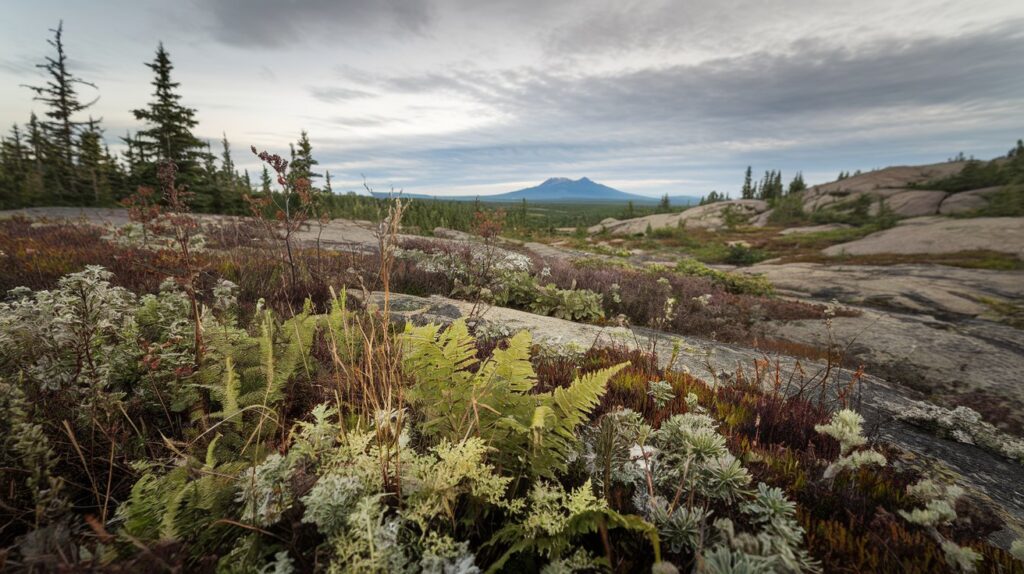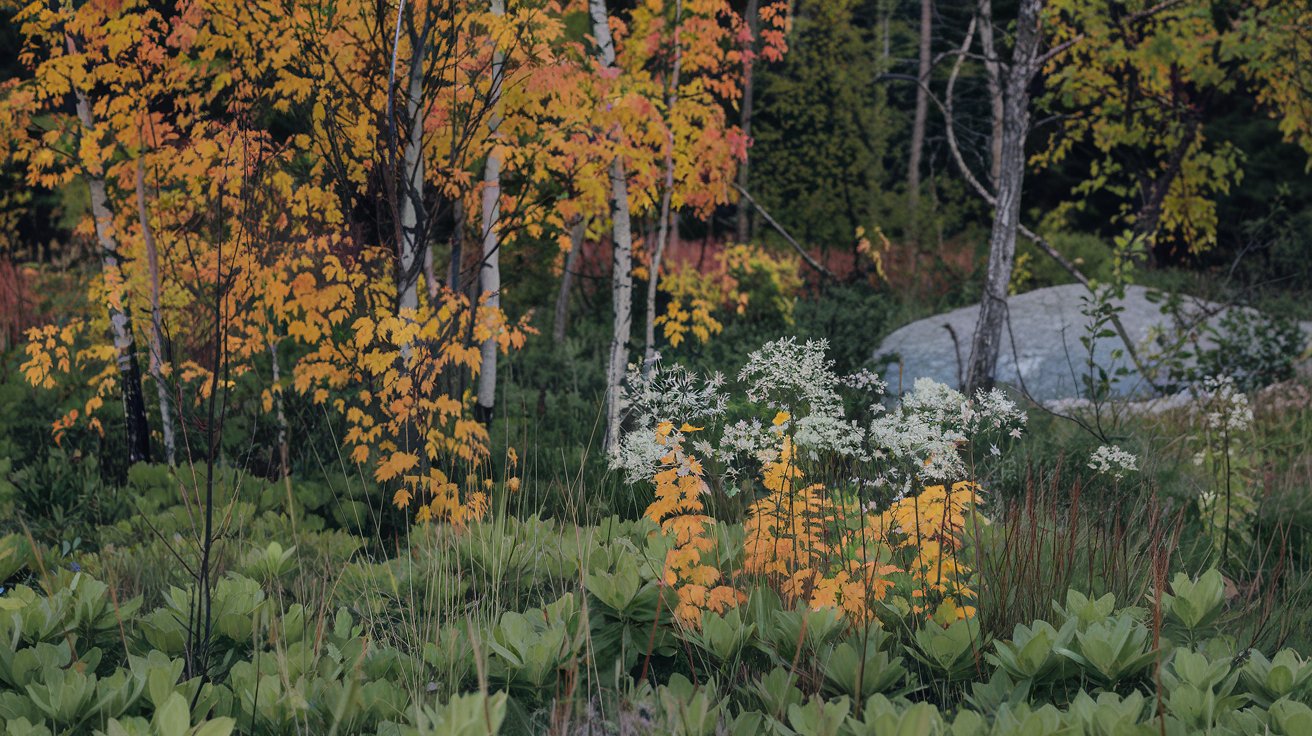
The Canadian Shield supports a remarkable diversity of plant life adapted to harsh conditions across 1.8 million square miles of ancient bedrock. From boreal forests dominated by black spruce and jack pine to resilient lichens and mosses covering exposed granite, the vegetation in this region demonstrates extraordinary survival strategies. This comprehensive guide explores the types of plants in the Canadian Shield, their adaptations, distribution patterns, and ecological significance for both Canada and the northern United States border regions.
What Grows on the Canadian Shield: Overview of Vegetation
The Canadian Shield vegetation consists primarily of boreal forest ecosystems that cover approximately 75% of the region’s vegetated areas. The dominant tree species include black spruce, white spruce, jack pine, balsam fir, tamarack, white birch, and trembling aspen. These hardy plants have evolved specific adaptations to survive the region’s short growing season of 80-120 days, acidic soils formed from glacial deposits, and temperature extremes ranging from -40°F in winter to 80°F in summer months.
The remaining 25% of vegetation includes tundra-like environments in northern sections, extensive wetlands featuring sedges and sphagnum moss, and exposed bedrock areas colonized by lichens and mosses. According to 2026 ecological surveys, the Canadian Shield contains over 800 native plant species, with biodiversity increasing from north to south as climate conditions moderate and soil depth increases.
Types of Plants in the Canadian Shield by Category
Understanding the plant diversity in the Canadian Shield requires examining distinct categories based on growth form, habitat preference, and ecological function. Each category represents specialized adaptations to the region’s unique environmental challenges.
Coniferous Trees and Evergreen Species
Coniferous trees dominate the Canadian Shield landscape, accounting for 60-70% of forest coverage. Black spruce (Picea mariana) thrives in poorly drained areas and can survive in shallow soils over bedrock, often growing in dense stands that create dark, acidic forest floors. Jack pine (Pinus banksiana) prefers sandy, well-drained sites and features serotinous cones that require fire for seed release, making it perfectly adapted to the Shield’s natural fire cycle of 50-150 years. White spruce (Picea glauca) occupies better-drained sites and can reach heights of 80-100 feet in optimal conditions.
Balsam fir (Abies balsamea) fills understory positions in mixed forests and produces aromatic resin valued for traditional and commercial uses. Tamarack (Larix laricina), the region’s only deciduous conifer, colonizes wetlands and demonstrates remarkable cold tolerance, surviving temperatures below -60°F. Eastern white pine (Pinus strobus) appears in southern Shield regions, particularly around the Great Lakes, where it formed extensive old-growth forests before historical logging operations.
Deciduous Trees and Hardwood Species
Deciduous trees comprise 20-30% of Canadian Shield forests, with species diversity increasing in southern regions. White birch (Betula papyrifera) serves as a pioneering species after disturbances, colonizing burned areas and rocky outcrops with its lightweight wind-dispersed seeds. The distinctive white bark reflects sunlight and prevents overheating during summer months. Trembling aspen (Populus tremuloides) spreads through extensive root systems, creating clonal colonies that can persist for thousands of years and quickly regenerate after fire.
Additional hardwood species include red maple (Acer rubrum) in mixed forests, yellow birch (Betula alleghaniensis) on mesic sites, and mountain ash (Sorbus americana) in rocky uplands. American mountain ash produces bright red berry clusters that provide critical winter food for wildlife. In transitional zones bordering the Shield, red oak (Quercus rubra) and sugar maple (Acer saccharum) appear where soil depth and fertility support these more demanding species.
Shrubs and Understory Vegetation
The shrub layer in Canadian Shield forests creates essential habitat structure and food resources for wildlife. Blueberries (Vaccinium species) thrive in acidic forest soils, with lowbush blueberry (V. angustifolium) forming extensive patches on rocky sites and burned areas. Commercial harvesting of wild blueberries generates significant economic value in Shield regions. Labrador tea (Rhododendron groenlandicum) dominates poorly drained sites with its aromatic, leathery leaves adapted to reduce water loss.
Other significant shrub species include alder (Alnus species) in wet areas that fixes atmospheric nitrogen and improves soil fertility, willow (Salix species) along water bodies, sweet gale (Myrica gale) in wetlands, and Canada yew (Taxus canadensis) in shaded forest understories. Bearberry (Arctostaphylos uva-ursi) covers exposed rocky slopes with its trailing evergreen stems, while wintergreen (Gaultheria procumbens) provides aromatic ground cover in coniferous forests.
Ground Cover Plants and Mosses
Ground layer vegetation plays crucial ecological roles in moisture retention, nutrient cycling, and microhabitat creation. Sphagnum mosses (Sphagnum species) dominate wetland areas, accumulating organic matter that forms peat deposits up to 30 feet deep in some locations. These mosses acidify their surroundings and hold water at 20 times their dry weight, creating unique hydrology. Feather mosses including Pleurozium schreberi and Hylocomium splendens carpet coniferous forest floors, creating a springy layer that insulates soil and moderates temperature fluctuations.
Lichens represent symbiotic partnerships between fungi and algae or cyanobacteria, colonizing bare rock surfaces where other plants cannot establish. Reindeer lichens (Cladonia species) form extensive mats on sandy sites and rocky outcrops, providing critical winter forage for caribou. Rock tripe lichens (Umbilicaria species) grow directly on granite surfaces, while old man’s beard (Usnea species) drapes from conifer branches, indicating good air quality with its sensitivity to pollution.
Wildflowers and Herbaceous Plants
Wildflowers add seasonal color and support pollinator populations throughout the Canadian Shield. Fireweed (Chamaenerion angustifolium) colonizes disturbed sites rapidly after fires or logging, producing spectacular displays of magenta flowers in late summer. Wild lupine (Lupinus perennis) improves soil through nitrogen fixation while its blue flower spikes attract bumblebees. Bunchberry (Cornus canadensis) forms carpets in coniferous forests, producing white flower bracts in spring followed by red berries in fall.
Additional herbaceous species include wild sarsaparilla (Aralia nudicaulis) with compound leaves on forest floors, twinflower (Linnaea borealis) trailing through moss, Canada mayflower (Maianthemum canadense) in mixed woods, and starflower (Trientalis borealis) in acidic soils. Pink lady’s slipper orchid (Cypripedium acaule) appears occasionally in pine forests, requiring specific soil fungi for germination and growth.
Canadian Shield Climate and Plant Adaptations
The Canadian Shield climate presents extreme challenges that shape plant evolution and distribution patterns. The region experiences a continental climate with cold winters averaging -20°F to -4°F and short summers with temperatures between 60°F and 75°F. Annual precipitation ranges from 15-35 inches, with significant variation across the Shield’s vast expanse. Northern sections receive less precipitation and experience colder temperatures, creating conditions similar to subarctic tundra.
Plant adaptations to this harsh climate include needle-like or small leaves that reduce water loss, waxy cuticles that prevent desiccation during frozen soil periods, dark pigments that maximize heat absorption, and evergreen habit that allows immediate photosynthesis when conditions permit. Many Shield plants exhibit slow growth rates, with trees taking 80-120 years to reach maturity compared to 40-60 years for similar species in more favorable climates. The 2026 climate models predict gradual warming that may shift vegetation zones northward by 60-120 miles over the next 50 years.
Soil Conditions and Vegetation Distribution
Soil characteristics profoundly influence which plants can establish and thrive in different Shield locations. The region features predominantly acidic soils with pH values between 4.0 and 5.5, formed from glacial till deposited during ice sheet retreat 10,000-12,000 years ago. Soil depth varies dramatically, from zero on exposed bedrock to several feet in valleys and depressions. The shallow soils over bedrock drain rapidly during dry periods but become waterlogged in depressions where clay layers prevent drainage.
Podzolic soils dominate forested areas, characterized by leached gray surface horizons above reddish-brown accumulation layers enriched with iron and organic matter. These nutrient-poor soils support specialized plant communities adapted to low fertility. Wetland areas contain organic soils composed of partially decomposed plant material, while esker ridges feature sandy, well-drained soils that support jack pine and blueberry. Understanding soil-plant relationships helps predict vegetation patterns and explains why certain species concentrate in specific Shield locations.
Natural Resources and Economic Importance of Shield Plants
The natural resources provided by Canadian Shield vegetation contribute significantly to regional and national economies. Forest products include timber for construction and pulp, with black spruce particularly valued for paper manufacturing due to its long fibers. The Canadian forest industry harvests approximately 150 million cubic meters of timber annually from boreal regions, with significant portions originating from the Shield. Sustainable forestry practices implemented since 2010 ensure regeneration and maintain ecological functions.
Non-timber forest products generate substantial value through wild blueberry harvesting, maple syrup production in southern Shield regions, and traditional medicines derived from native plants. The 2026 wild blueberry market in North America exceeds $800 million annually, with much production occurring on Shield lands. Ecosystem services provided by Shield vegetation include carbon storage estimated at 25-35 tons per acre in mature forests, water filtration through wetlands, and habitat for commercially valuable wildlife species including moose, beaver, and migratory waterfowl.
Wetland Plants and Aquatic Vegetation
Wetland ecosystems cover approximately 25-30% of the Canadian Shield landscape, supporting specialized plant communities adapted to saturated soils and fluctuating water levels. Sedges (Carex species) dominate wet meadows and marsh edges, with over 100 species occurring across the Shield. These grass-like plants feature triangular stems and provide nesting material for waterfowl. Cattails (Typha latifolia) colonize open water margins, creating dense stands that filter sediments and provide wildlife cover.
Aquatic plants include water lilies (Nymphaea odorata) with floating leaves and fragrant white flowers, pondweeds (Potamogeton species) providing submerged vegetation for fish habitat, and aquatic grasses in shallow lakes. Wetland shrubs such as sweet gale, bog rosemary (Andromeda polifolia), and leatherleaf (Chamaedaphne calyculata) form transitional zones between open water and upland forests. These wetland plants collectively process nutrients, stabilize shorelines, and maintain water quality across the Shield’s extensive lake and river systems.
Fire Ecology and Plant Succession
Fire ecology fundamentally shapes Canadian Shield vegetation patterns, with natural fire cycles historically occurring every 50-150 years depending on location and forest type. Jack pine forests depend on fire for regeneration, as intense heat opens serotinous cones and releases seeds onto nutrient-enriched ash beds. Black spruce also features semi-serotinous cones and readily regenerates after fire through both seed dispersal and layering of lower branches.
Post-fire succession follows predictable patterns beginning with pioneering species like fireweed and aspen that colonize burned areas within 1-2 years. Shade-intolerant species including jack pine and paper birch dominate for 20-40 years, gradually yielding to shade-tolerant conifers like black spruce and balsam fir that establish in understories. Fire suppression policies implemented during the 20th century altered natural succession patterns, leading to older, denser forests more susceptible to catastrophic fires. Modern forest management increasingly incorporates prescribed burning to restore natural fire regimes and maintain ecosystem health across Shield landscapes.
Regional Variations in Shield Vegetation
Regional differences in Canadian Shield vegetation reflect latitudinal gradients, local climate variations, and geological factors. The northern Shield transitions into forest-tundra where stunted black spruce intermingles with caribou lichens, dwarf birch, and arctic willows. Tree growth becomes increasingly limited above 58°N latitude, with the treeline marking the northern boundary of continuous forest cover.
The southern Shield around the Great Lakes features richer, more diverse forests with higher proportions of deciduous trees and greater species richness. This region includes transitional zones where Shield vegetation intermingles with more temperate forest types. Western Shield areas in Manitoba and Saskatchewan receive less precipitation and support more open forests with aspen parkland transitions. Eastern Shield sections in Quebec and Labrador experience maritime influences with higher precipitation, supporting denser forests and more extensive wetland complexes. Understanding these regional variations helps explain the full diversity of plants in the Canadian Shield ecosystem.
Conservation and Future Challenges
Conservation efforts for Canadian Shield vegetation address multiple pressures including climate change, resource extraction, and invasive species. Approximately 10% of the Shield landscape currently receives protection in national parks, provincial reserves, and Indigenous-managed conservation areas. Notable protected areas include Pukaskwa National Park in Ontario, La Mauricie National Park in Quebec, and numerous wilderness areas that preserve old-growth forest remnants and intact watersheds.
Climate change impacts observed through 2026 include northward shifts in species ranges, altered fire regimes with more frequent large fires, and drought stress in previously mesic areas. Modeling suggests boreal forest zones may shift 200-300 miles northward by 2100 under moderate warming scenarios, potentially transforming Shield vegetation communities. Management strategies focus on maintaining habitat connectivity, protecting climate refugia where sensitive species can persist, and supporting Indigenous stewardship practices that have sustained Shield ecosystems for thousands of years. Ongoing research examines plant resilience and adaptive capacity to guide conservation decisions for this globally significant biome.
Related video about plants in the canadian shield
This video complements the article information with a practical visual demonstration.
Your questions answered
What are the most common plants found in the Canadian Shield?
The most common plants in the Canadian Shield include black spruce, jack pine, white spruce, and balsam fir among trees, with white birch and trembling aspen as dominant deciduous species. The understory features extensive blueberry patches, Labrador tea, and various mosses including sphagnum in wetlands and feather mosses in forests. Ground cover includes numerous lichen species, particularly reindeer lichens on rocky sites. These plants have adapted to the Shield’s harsh conditions including short growing seasons, acidic soils, and temperature extremes, forming the boreal forest ecosystem that characterizes the region.
How do plants survive the harsh Canadian Shield climate?
Plants survive through specialized adaptations including evergreen needles that reduce water loss and allow year-round photosynthesis, waxy leaf coatings preventing desiccation, dark pigments maximizing solar heat absorption, and slow growth rates conserving energy. Many species feature shallow but extensive root systems spreading across thin soils over bedrock. Coniferous trees produce antifreeze compounds preventing cellular ice damage at temperatures below -40°F. Deciduous species enter dormancy and drop leaves before winter, while ground layer plants shelter beneath insulating snow cover. These adaptations enable Shield vegetation to thrive despite only 80-120 frost-free days annually and extreme temperature fluctuations.
What types of trees grow in the Canadian Shield boreal forest?
The Canadian Shield boreal forest contains primarily coniferous species including black spruce, white spruce, jack pine, balsam fir, and tamarack, which collectively account for 60-70% of forest coverage. Deciduous trees comprise 20-30% and include white birch, trembling aspen, balsam poplar, and in southern areas, red maple and yellow birch. Eastern white pine appears in transitional zones around the Great Lakes. Forest composition varies by location, with jack pine dominating sandy sites, black spruce in poorly drained areas, and mixed stands on moderate sites. These tree species form distinct communities based on soil conditions, drainage patterns, and disturbance history across the Shield landscape.
Are there any unique wildflowers native to the Canadian Shield?
The Canadian Shield supports numerous wildflowers adapted to its conditions. Notable species include pink lady’s slipper orchid requiring specific soil fungi, bunchberry producing white bracts and red berries, fireweed colonizing burned areas with magenta blooms, wild lupine fixing nitrogen in sandy soils, and twinflower with paired pink flowers. Other distinctive species include starflower, Canada mayflower, wild sarsaparilla, and various aster species. These wildflowers typically bloom during the brief summer growing season from June through August, taking advantage of long daylight hours at northern latitudes. Many species depend on specific pollinators including native bees and butterflies that have co-evolved with Shield flora.
What role do mosses and lichens play in the Canadian Shield ecosystem?
Mosses and lichens perform critical ecological functions in the Canadian Shield. Sphagnum mosses dominate wetlands, acidifying water and accumulating organic matter into peat deposits that store vast amounts of carbon. Feather mosses carpet forest floors, insulating soils, retaining moisture, and providing habitat for invertebrates and small mammals. Lichens colonize bare rock where no other plants can grow, beginning soil formation through slow weathering processes. Reindeer lichens provide essential winter forage for caribou herds. Together, these non-vascular plants contribute to nutrient cycling, water regulation, and biodiversity, while indicating air quality and environmental health across the Shield landscape.
How is climate change affecting Canadian Shield vegetation?
Climate change impacts on Canadian Shield plants include northward shifts in species ranges, with boreal zones moving 60-120 miles north already observed by 2026. Warmer temperatures extend growing seasons by 5-10 days but increase drought stress during summer months. Fire frequency has increased 25-40% since 2000, altering forest age structure and composition. Some southern species like red maple are expanding northward into the Shield, while cold-adapted species face range contractions. Permafrost thaw in northern sections changes soil drainage patterns, affecting wetland plant communities. These changes may transform Shield vegetation significantly over coming decades, requiring adaptive management strategies and conservation planning to maintain ecosystem resilience.
| Plant Category | Representative Species | Key Adaptations | Ecological Role |
|---|---|---|---|
| Coniferous Trees | Black spruce, jack pine, balsam fir | Evergreen needles, shallow roots, cold tolerance | Forest structure, carbon storage, wildlife habitat |
| Deciduous Trees | White birch, trembling aspen | Pioneer species, clonal reproduction, fire recovery | Early succession, biodiversity support |
| Shrubs | Blueberry, Labrador tea, alder | Acid tolerance, nitrogen fixation, berry production | Food resources, soil enrichment |
| Ground Cover | Mosses, lichens, wintergreen | Rock colonization, moisture retention, symbiosis | Soil formation, water cycling, caribou forage |
| Wetland Plants | Sedges, cattails, sphagnum | Saturated soil tolerance, peat formation | Water filtration, carbon sequestration |
| Wildflowers | Fireweed, bunchberry, lupine | Rapid colonization, pollinator attraction | Pollinator support, disturbance recovery |