The Canadian Shield wildlife represents one of North America’s most diverse ecosystems, spanning 1.8 million square miles across northern regions. This ancient geological formation supports over 200 mammal species, 300 bird varieties, and countless fish populations adapted to harsh climates and rocky terrain. Understanding this wildlife helps Americans appreciate the ecological connections between northern Canada and northern United States border regions sharing similar species.
What Wildlife Lives in the Canadian Shield
The Canadian Shield hosts remarkable biodiversity despite its challenging environment. Large mammals dominate the landscape, with moose populations exceeding 500,000 individuals across the region in 2026. These herbivores thrive in the shield’s mixed boreal forests, feeding on aquatic vegetation from thousands of lakes and wetlands. Black bears number approximately 400,000 throughout the Canadian Shield, making them the most common large predator in this ecosystem.
Caribou herds migrate across northern portions of the shield, with woodland caribou populations particularly significant in Ontario and Quebec regions. White-tailed deer have expanded their range northward due to climate shifts, now commonly found in southern shield areas. Wolverines, though rare, maintain small populations in remote northern sections, while fishers and martens thrive in dense forest habitats throughout the shield wildlife zones.
Iconic Mammals of the Canadian Shield
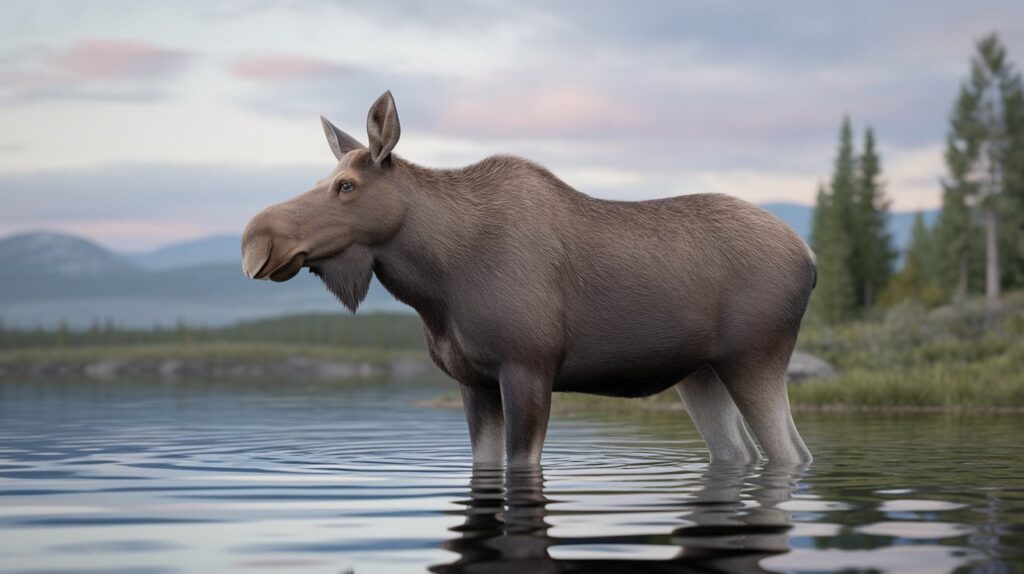
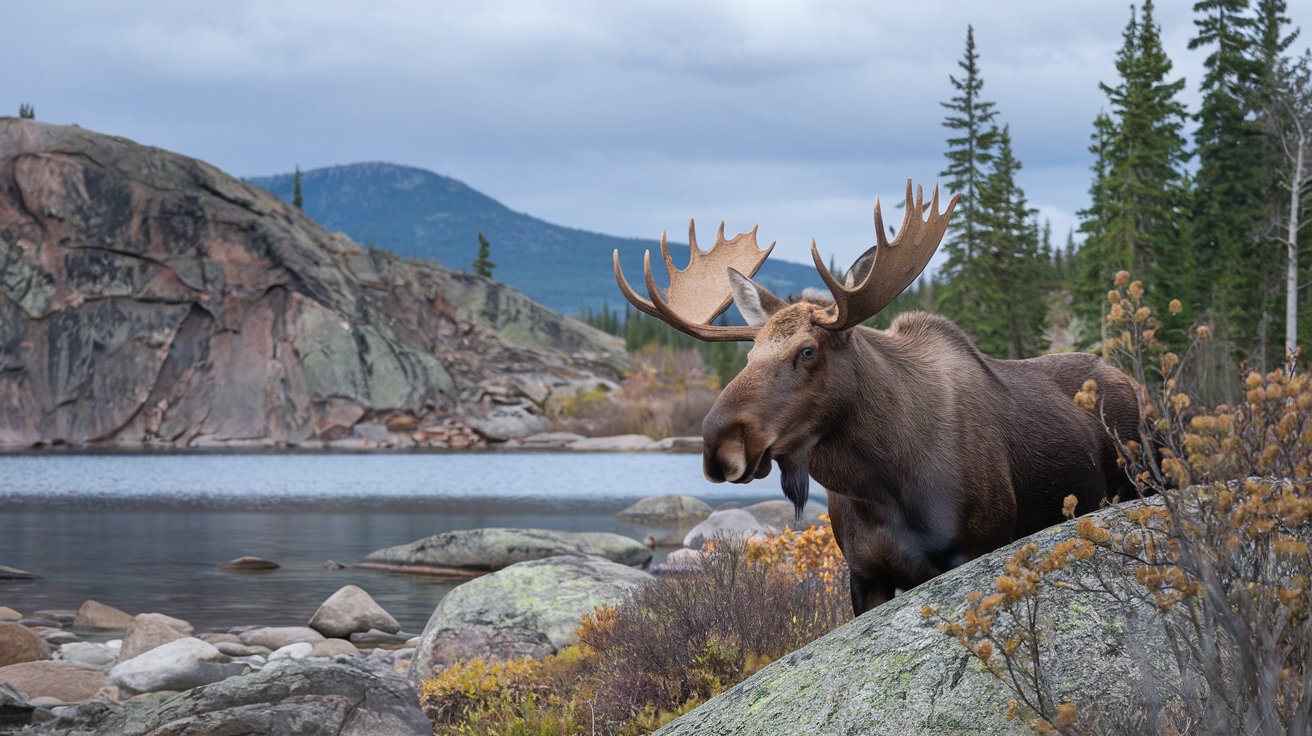
Moose stand as the largest members of the deer family, with adult bulls weighing up to 1,500 pounds in Canadian Shield territories. These animals prefer wetland areas and young forest growth, conditions abundant throughout the shield’s landscape. Beaver populations, numbering in the millions, actively shape shield ecosystems by creating wetlands that support countless other species. Their engineering activities increase wildlife biodiversity by creating varied aquatic habitats essential for amphibians, fish, and waterfowl.
Lynx populations fluctuate cyclically with snowshoe hare numbers, their primary prey species. Current 2026 estimates suggest approximately 35,000 lynx inhabit Canadian Shield forests, with populations highest in Quebec and northern Ontario. River otters thrive in the shield’s extensive waterway networks, while mink and muskrat occupy wetland margins. Red foxes and grey wolves represent important predators controlling smaller mammal populations across this vast wildlife region.
Bird Species Diversity
Over 300 bird species utilize Canadian Shield habitats during various life stages, including approximately 150 breeding species. Common loons symbolize shield wilderness, with their haunting calls echoing across thousands of lakes each summer. Populations remain stable at around 250,000 breeding pairs throughout Canadian waters. Bald eagles have experienced remarkable recovery, with 2026 populations exceeding 20,000 nesting pairs across shield territories, benefiting from clean waterways and abundant fish stocks.
Boreal forest specialists like gray jays, boreal chickadees, and spruce grouse depend entirely on Canadian Shield coniferous forests. Migratory warblers, including blackpoll warblers and yellow-rumped warblers, nest in shield forests before their impressive journeys to Central and South America. Waterfowl diversity peaks during spring and fall migrations, with millions of ducks and geese utilizing shield wetlands as critical stopover sites between breeding and wintering grounds.
Canada’s Top Predator in the Shield Region
The grey wolf holds the position as Canada’s top predator within the Canadian Shield ecosystem, with populations estimated at 35,000 to 40,000 individuals in 2026. These apex predators play crucial roles maintaining ecosystem balance by controlling deer, moose, and caribou populations. Wolf packs typically consist of 5-8 members, though larger groups exist in areas with abundant prey. Their territories can span 200-500 square miles depending on prey density and wildlife availability throughout shield regions.
Wolves in the Canadian Shield primarily hunt moose during winter months when deep snow handicaps their large prey. During summer, they shift to beaver, deer, and smaller mammals. Pack hunting strategies allow wolves to successfully take down prey much larger than themselves. Their presence indicates healthy ecosystem function, as top predator populations require extensive territories with sufficient prey bases, clean water sources, and minimal human disturbance across shield landscapes.
Other Significant Predators
Black bears, while primarily omnivorous, function as important predators within Canadian Shield food webs. They prey on moose calves, beaver kits, and fish during salmon runs in shield rivers. Adult males can weigh 600 pounds, though most average 300-400 pounds. Their predator role increases during spring when protein-rich prey helps them recover from winter dormancy and females feed growing cubs.
Cougars have slowly expanded into southern Canadian Shield areas, with confirmed sightings increasing 40% since 2020. Though populations remain small, approximately 150-200 individuals now occupy shield territories in Ontario. Coyotes have filled ecological niches throughout the shield, with some eastern populations showing wolf-coyote hybridization. These adaptable predators successfully exploit diverse prey from mice to deer, demonstrating remarkable ecological flexibility across varied shield habitats.
Does the Canadian Shield Have Polar Bears
The Canadian Shield does support polar bear populations along its extreme northern coastal regions where shield geology meets Hudson Bay and James Bay. Approximately 1,200 polar bears inhabit western Hudson Bay populations, portions of which overlap with northern shield territories. These bears depend on sea ice for hunting seals, their primary prey, though they come ashore onto shield land during ice-free summer months when hunting becomes impossible.
Climate change has significantly impacted polar bears in shield-adjacent areas, with ice-free periods extending 3-4 weeks longer in 2026 compared to 1990s data. This forces bears to spend more time on land, where they may encounter other Canadian Shield wildlife and occasionally prey on caribou, bird eggs, or vegetation. Southern Hudson Bay populations show concerning declines, dropping approximately 30% over the past two decades due to reduced hunting opportunities and increased energy expenditure during extended ice-free periods.
Polar Bear Behavior on Shield Terrain
When polar bears occupy shield coastlines during summer, they enter a state of walking hibernation, conserving energy until ice reforms. They dig day beds in coastal peat or shelter among shield rock formations. Pregnant females may den in snowdrifts along shield coastlines, giving birth to cubs in midwinter. These maternity dens provide critical protection, with shield topography offering wind protection and snow accumulation necessary for successful denning.
Interactions between polar bears and traditional shield species remain limited but increasing. Black bears occasionally encounter polar bears in coastal transition zones, typically avoiding confrontation. As ice-free periods extend, polar bears spend more time foraging on shield vegetation, berries, and scavenging opportunities, though these food sources provide insufficient calories for long-term survival compared to their seal-based diet.
Canadian Shield Climate and Wildlife Adaptations
The Canadian Shield climate profoundly influences wildlife survival strategies, with temperatures ranging from -40°F in winter to 80°F during brief summers. Annual precipitation averages 16-32 inches, much falling as snow that blankets the landscape 5-7 months yearly. These extreme conditions have shaped remarkable wildlife adaptations, from thick winter fur coats to hibernation strategies and migration patterns synchronized with seasonal resource availability.
Winter survival requires specialized adaptations across Canadian Shield species. Ruffed grouse grow feather-like projections on their toes, creating natural snowshoes for walking on powder. Snowshoe hares transform from brown to white, providing camouflage against predators throughout winter months. Many wildlife species, including bears, ground squirrels, and chipmunks, hibernate to avoid the harshest conditions when food becomes scarce and energy demands exceed available resources.
Seasonal Wildlife Patterns
Spring migration brings dramatic wildlife increases to Canadian Shield regions, with millions of birds arriving from southern wintering grounds between April and June. Waterfowl crowd shield wetlands, taking advantage of abundant aquatic invertebrates and emerging vegetation. Caribou move northward to calving grounds, while moose seek nutrient-rich aquatic plants in warming lakes and shield waterways that provide essential minerals after winter’s nutritional stress.
Summer represents peak wildlife activity, with 24-hour daylight in northern shield areas allowing extended feeding periods. Birds race to complete nesting cycles during the brief 90-120 day growing season. Mammals accumulate fat reserves essential for surviving the coming winter. Autumn triggers southward migrations, with Canadian Shield serving as critical corridor for billions of birds traveling to Central and South America, while resident species intensify feeding to prepare for winter’s challenges.
Canadian Shield Bodies of Water and Aquatic Wildlife
Canadian Shield bodies of water exceed 250,000 lakes and countless rivers, creating North America’s most extensive freshwater system. These waters support remarkable fish diversity, including walleye, northern pike, lake trout, brook trout, and smallmouth bass populations valued by both ecosystems and recreational anglers. Lake trout, particularly adapted to cold, deep shield lakes, can live over 40 years and reach weights exceeding 60 pounds in pristine Canadian Shield environments.
Aquatic ecosystems support food webs extending far beyond fish populations. Freshwater mussels filter shield waters, while crayfish provide essential prey for numerous predators. Leeches, aquatic insects, and zooplankton form foundational food web components supporting both aquatic and terrestrial wildlife. Amphibians including wood frogs, spring peepers, and several salamander species complete their life cycles in shield wetlands, with wood frogs remarkably surviving complete freezing during winter months through specialized antifreeze compounds in their blood.
River and Lake Ecosystems
Shield rivers connect vast lake systems, creating migration corridors for fish and wildlife movement. Brook trout populations thrive in cold, oxygen-rich shield streams, while pike and walleye dominate larger river systems. Many shield rivers feature rapids and waterfalls formed by underlying bedrock, creating diverse habitat structures that support varied aquatic communities. These bodies of water remain remarkably clean, with many shield lakes maintaining oligotrophic conditions characterized by high clarity and low nutrient concentrations.
Wetland complexes throughout the Canadian Shield provide critical habitat for waterfowl, amphibians, and aquatic mammals. Beaver activity creates and maintains extensive wetland systems, with individual colonies managing multiple dams and ponds. These engineered bodies of water increase local biodiversity by creating habitat mosaics supporting species from moose browsing aquatic vegetation to mink hunting along shorelines, demonstrating how beaver activity ripples throughout entire shield ecosystems.
Canadian Shield Vegetation Supporting Wildlife
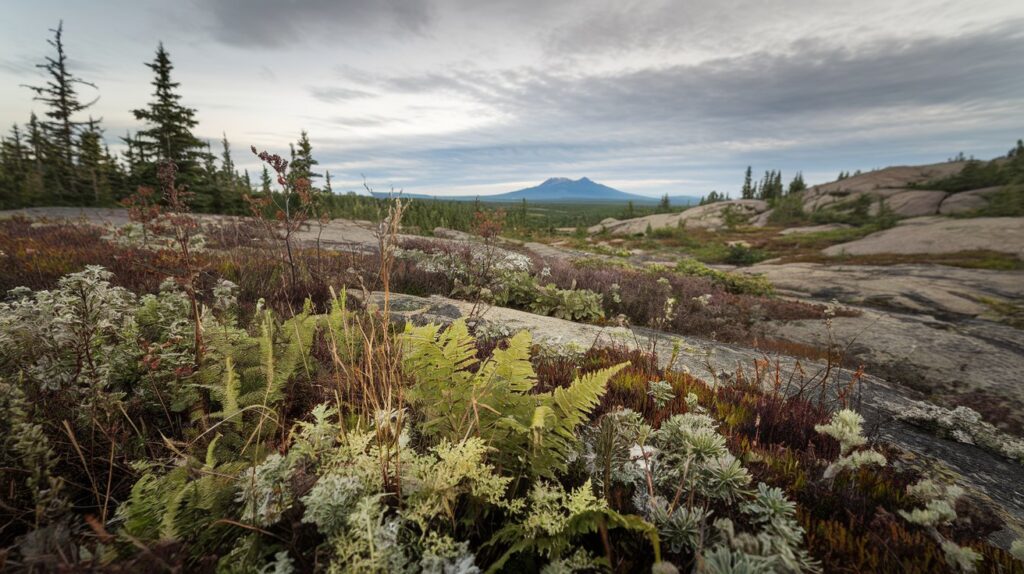
Canadian Shield vegetation consists primarily of boreal forest dominated by black spruce, white spruce, balsam fir, jack pine, and paper birch. These forests provide essential habitat structure for countless wildlife species, from cavity-nesting birds to arboreal mammals. Approximately 35% of shield area supports dense forest, while 25% consists of wetlands, 15% open water, and 25% exposed bedrock with sparse vegetation cover creating a complex landscape mosaic.
Understory vegetation includes blueberries, Labrador tea, and various lichens that provide critical food sources for wildlife. Caribou depend entirely on terrestrial lichens during winter, consuming up to 12 pounds daily. Berry-producing shrubs support bears, birds, and small mammals during late summer and fall. The Canadian Shield supports unique plant communities adapted to thin, acidic soils and short growing seasons, with many species employing specialized strategies like evergreen foliage or nitrogen-fixing root associations to thrive in nutrient-poor conditions.
Forest Structure and Wildlife Habitat
Old-growth Canadian Shield forests provide irreplaceable wildlife habitat, featuring large-diameter trees, standing dead snags, and fallen logs creating structural complexity. Pileated woodpeckers excavate nesting cavities in mature trees, which subsequently house flying squirrels, owls, and pine martens. Dead standing timber supports bark beetle populations that feed woodpeckers and other insectivorous birds, while fallen logs slowly decompose, releasing nutrients and providing shelter for small wildlife from shrews to salamanders.
Fire plays natural roles in shield forest dynamics, with fires occurring every 50-200 years depending on location and forest type. Post-fire succession creates diverse-aged forest stands supporting varied wildlife communities. Young regenerating forests provide abundant browse for moose and deer, while mature forests offer thermal cover and predator protection. This mosaic of vegetation ages, created by natural disturbance patterns, maximizes biodiversity across Canadian Shield landscapes.
Why Can’t We Live on the Canadian Shield
The question of why can’t we live on the Canadian Shield involves multiple challenging factors, though millions actually do inhabit shield regions in cities like Winnipeg, Sudbury, and Thunder Bay. However, large-scale agricultural settlement remains impossible due to thin, rocky soils averaging only 2-6 inches depth over bedrock. These soils formed through glacial scraping during ice ages, leaving minimal material for plant growth and making conventional farming economically unviable across most shield territories.
Extreme climate conditions create additional settlement challenges, with winter temperatures regularly dropping below -20°F and persisting for 5-6 months annually. Infrastructure costs escalate dramatically due to permafrost in northern regions, bedrock drilling requirements for foundations, and distances from supply centers. Transportation networks remain limited, with many northern Canadian Shield communities accessible only by air or winter ice roads. These factors combine to make large-scale settlement economically and practically challenging, though Indigenous communities have successfully inhabited shield regions for over 10,000 years through specialized subsistence strategies.
Human Communities and Wildlife Coexistence
Existing Canadian Shield communities maintain unique relationships with surrounding wildlife, from managing bear interactions to protecting caribou migration routes. Mining and forestry towns scattered across the shield employ approximately 400,000 people in resource extraction industries that coexist with wildlife populations. Sustainable management practices in 2026 increasingly incorporate wildlife corridor protection, seasonal operation restrictions during critical breeding periods, and habitat restoration requirements balancing economic development with conservation.
Indigenous communities throughout the shield maintain traditional hunting, fishing, and gathering practices that have sustained human populations for millennia. These communities possess irreplaceable ecological knowledge about wildlife behavior, seasonal patterns, and sustainable harvest practices. Modern conservation increasingly incorporates this traditional knowledge, recognizing that successful wildlife management requires understanding developed through generations of direct interaction with Canadian Shield ecosystems and their remarkable biodiversity.
Canadian Shield Wildlife Conservation in 2026
Canadian Shield wildlife conservation faces evolving challenges in 2026, including climate change impacts, resource development pressures, and shifting species distributions. Protected areas now cover approximately 18% of shield territories, including national and provincial parks preserving critical habitats. These protected zones serve as population sources for wide-ranging species like wolves and caribou, while maintaining genetic diversity essential for long-term wildlife population health and ecosystem resilience.
Climate change drives northward range expansions for southern species like white-tailed deer and coyotes, while challenging cold-adapted species including caribou and lynx. Winter temperatures in southern shield regions have increased 3-4°F since 1990, altering snow conditions, ice-out timing on lakes, and vegetation composition. These changes cascade through ecosystems, affecting everything from insect emergence timing to predator-prey dynamics. Conservation strategies increasingly focus on maintaining landscape connectivity allowing wildlife to shift ranges in response to changing conditions.
Threatened Species Protection
Woodland caribou populations face significant challenges across Canadian Shield regions, with many herds declining due to habitat fragmentation and increased predation. Federal and provincial governments have designated caribou as threatened, implementing habitat protection measures and predator management programs. Current populations number approximately 35,000 individuals, down from historical estimates exceeding 100,000. Recovery efforts focus on maintaining large, undisturbed forest tracts essential for caribou survival in shield ecosystems.
Wolverines remain rare throughout the Canadian Shield, with populations estimated at fewer than 300 individuals in shield territories. These solitary predators require vast wilderness areas and remain highly sensitive to human disturbance. Conservation efforts prioritize maintaining remote wilderness zones where wolverines can persist. Lake sturgeon populations, once abundant in shield rivers, have declined dramatically due to historical overfishing and habitat degradation, with restoration programs now working to rebuild these ancient fish populations that can live over 100 years in Canadian waters.
Exploring Canadian Shield Wildlife Landmarks
Canadian Shield landmarks provide exceptional wildlife viewing opportunities across accessible locations. Algonquin Provincial Park in Ontario protects 2,900 square miles of shield wilderness, offering reliable moose, beaver, and wolf sightings alongside 260 bird species. The park’s extensive trail system and canoe routes allow visitors to experience shield wildlife in natural settings while minimizing disturbance. Wolf howling programs during August attract thousands of visitors annually, providing unique opportunities to hear wild wolves responding to researchers.
Pukaskwa National Park along Lake Superior’s shoreline showcases dramatic shield landscapes where boreal forest meets freshwater coastline. Woodland caribou, black bears, and over 200 bird species inhabit park territories. La Mauricie National Park in Quebec features classic shield topography with rolling hills, numerous lakes, and dense forests supporting beaver, moose, and white-tailed deer populations easily observed from park roads and trails. These landmarks demonstrate how protected areas preserve wildlife while providing public access to shield ecosystems.
Related video about canadian shield wildlife
This video complements the article information with a practical visual demonstration.
Key Questions and Answers
What wildlife lives in the Canadian Shield?
The Canadian Shield supports over 200 mammal species including moose, black bears, grey wolves, caribou, lynx, and beaver. Over 300 bird species utilize shield habitats, including common loons, bald eagles, and numerous migratory warblers. Aquatic wildlife includes lake trout, northern pike, walleye, and brook trout in the shield’s 250,000+ lakes. Large predators like wolves number approximately 35,000-40,000 individuals, while black bear populations exceed 400,000 across shield territories in 2026.
Does the Canadian Shield have polar bears?
Polar bears inhabit extreme northern coastal regions where the Canadian Shield meets Hudson Bay and James Bay. Approximately 1,200 polar bears in western Hudson Bay populations spend ice-free summer months on shield shorelines. Climate change has extended ice-free periods by 3-4 weeks compared to 1990s, forcing bears to spend more time on shield land where they conserve energy and occasionally forage on vegetation, though these food sources cannot sustain them long-term without access to seal hunting on sea ice.
What is Canada’s top predator in the shield?
The grey wolf serves as Canada’s top predator within Canadian Shield ecosystems, with populations estimated at 35,000-40,000 individuals in 2026. Wolf packs of 5-8 members control prey populations including moose, deer, and caribou across territories spanning 200-500 square miles. Black bears also function as significant predators, particularly on moose calves and beaver. Cougars have recently expanded into southern shield areas with approximately 150-200 individuals now present, while coyotes have successfully colonized most shield regions.
Why can’t we live on the Canadian Shield?
Large-scale settlement of the Canadian Shield faces challenges from thin soils averaging only 2-6 inches over bedrock, making conventional agriculture impossible. Extreme winter temperatures below -20°F lasting 5-6 months, high infrastructure costs due to bedrock and permafrost, and isolation from supply centers limit development. However, millions actually do live on the shield in mining and forestry communities, while Indigenous peoples have successfully inhabited these regions for over 10,000 years through specialized subsistence strategies adapted to shield conditions.
How does climate affect Canadian Shield wildlife?
The Canadian Shield climate ranges from -40°F in winter to 80°F in summer, driving profound wildlife adaptations including hibernation, migration, and specialized winter survival strategies. Climate change has increased southern shield temperatures by 3-4°F since 1990, enabling southerly species like white-tailed deer and coyotes to expand northward while challenging cold-adapted species like caribou. Extended ice-free periods on lakes affect polar bears, while altered snow conditions and vegetation shifts cascade through ecosystems, affecting predator-prey dynamics across all shield wildlife communities.
What are the main Canadian Shield bodies of water?
Canadian Shield bodies of water include over 250,000 lakes and countless rivers forming North America’s most extensive freshwater system. Major water bodies include Lake Superior, Lake Huron portions, Great Bear Lake, and Great Slave Lake. These waters support diverse fish populations including lake trout, walleye, northern pike, and brook trout. Shield wetlands created by beaver activity provide critical habitat for waterfowl, amphibians, and aquatic mammals, while maintaining remarkably clean, oligotrophic conditions with high clarity and low nutrient concentrations that support unique aquatic ecosystems.
| Wildlife Category | Key Species & Population Data | Conservation Status 2026 |
|---|---|---|
| Large Mammals | 500,000+ moose, 400,000+ black bears, 35,000-40,000 grey wolves | Stable populations with sustainable management |
| Predators | Wolves as apex predators, increasing cougar presence (150-200), expanding coyote range | Healthy predator diversity supporting ecosystem balance |
| Bird Species | 300+ species including 250,000 common loon pairs, 20,000+ bald eagle pairs | Recovery success for eagles, stable breeding populations |
| Threatened Species | 35,000 woodland caribou (declining), <300 wolverines, reduced lake sturgeon | Active recovery programs, habitat protection increasing |
| Aquatic Wildlife | Lake trout, pike, walleye in 250,000+ lakes, diverse amphibian communities | Clean water systems supporting healthy fish populations |
| Climate Adaptations | Hibernation, migration, specialized winter survival across species | Monitoring range shifts as temperatures increase 3-4°F |