Mining exploration is the systematic process of searching for economically viable mineral deposits beneath the Earth’s surface. This critical phase involves geological surveys, geochemical analysis, and drilling to identify, assess, and define potential mining sites. In 2026, the United States mining exploration sector has invested over $2.8 billion in discovering new mineral resources, utilizing advanced technologies like AI-powered geological modeling and satellite-based remote sensing to maximize discovery success rates.
What Is Mining Exploration and Why It Matters
Mineral exploration represents the fundamental first step in the mining value chain, determining whether extractable mineral deposits exist in sufficient quantities to justify commercial extraction. This process combines geological science, geophysical analysis, and economic assessment to reduce investment risk and identify viable mining opportunities. According to 2026 data from the United States Geological Survey, successful exploration programs increase the probability of mine development by 340% compared to unvetted prospects.
The exploration process addresses four critical questions: where minerals are located, how much material exists, what quality grades are present, and whether extraction is economically feasible. Modern mining exploration integrates satellite imagery, drone surveys, geochemical sampling, and machine learning algorithms to analyze geological patterns. In the United States, exploration activities focus primarily on critical minerals including lithium, cobalt, rare earth elements, copper, and gold, supporting both traditional industrial demand and emerging clean energy technologies.
The Four Stages of Exploration Explained
The exploration lifecycle follows a systematic progression from initial reconnaissance to detailed resource definition, with each stage requiring progressively greater investment and technical precision. Understanding these stages of exploration helps stakeholders allocate resources efficiently and make informed decisions about project advancement. The four primary stages include reconnaissance, prospecting, detailed exploration, and development, each with distinct objectives and methodologies.
Stage 1: Reconnaissance and Generative Exploration
The initial reconnaissance stage involves broad-scale regional surveys covering thousands of square miles to identify prospective geological terrains. Exploration geologists analyze existing geological maps, satellite imagery, aeromagnetic surveys, and historical mining records to pinpoint areas with favorable mineral-forming conditions. In 2026, approximately 68% of United States exploration budgets allocate 8-12% of funds to this generative phase, which typically costs between $50,000 and $200,000 per target area. Advanced remote sensing technologies, including hyperspectral imaging and LiDAR, enable teams to identify subtle geological features indicative of mineralization without physical site visits.
Stage 2: Prospecting and Target Generation
During the prospecting stage, exploration teams conduct on-ground investigations of promising areas identified during reconnaissance. This phase includes geological mapping, rock chip sampling, stream sediment collection, and geophysical surveys such as magnetic, electromagnetic, and gravity measurements. Teams narrow focus from regional scales to specific targets measuring several square miles. United States exploration companies typically invest $300,000 to $1.5 million per prospect during this stage, which lasts 6-18 months. Modern prospecting incorporates portable XRF analyzers for real-time geochemical analysis and GPS-integrated data collection systems that feed directly into geological databases.
Stage 3: Detailed Exploration and Resource Definition
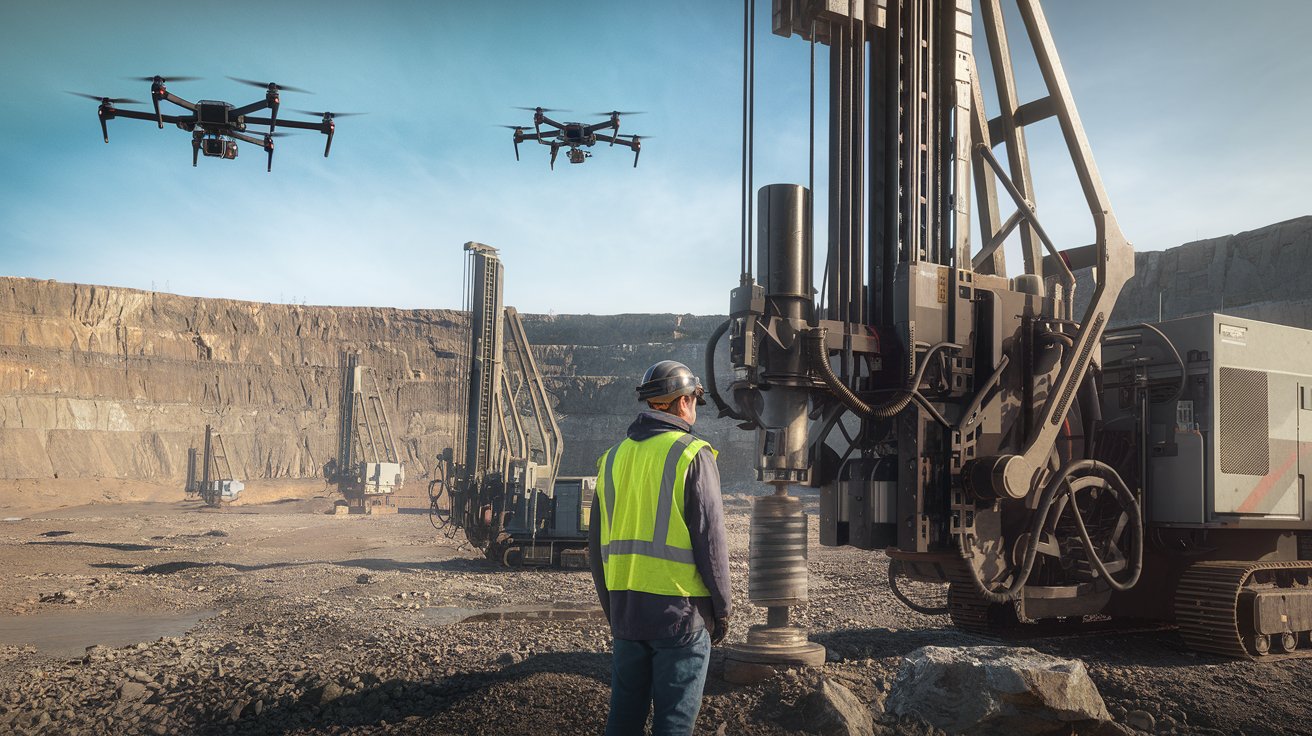
The detailed exploration phase employs systematic drilling programs to define the three-dimensional geometry, grade distribution, and tonnage of identified mineral deposits. Diamond core drilling provides continuous rock samples from depths reaching 1,500 meters or more, while reverse circulation drilling offers faster, cost-effective sampling for certain deposit types. Exploration budgets for this stage range from $3 million to $25 million, depending on deposit complexity and target depth. In 2026, United States projects average 15,000 to 50,000 meters of drilling to achieve preliminary resource estimates compliant with SEC Industry Guide 7 or NI 43-101 standards where applicable for Canadian companies operating in US jurisdictions.
Stage 4: Pre-Development and Feasibility Studies
The final exploration stage transitions into development planning through comprehensive feasibility studies that assess technical viability, economic returns, environmental impacts, and social considerations. This phase includes metallurgical testing, mine design optimization, infrastructure planning, and detailed financial modeling. Investment requirements escalate to $15 million to $150 million for major projects, with timelines extending 2-5 years. Successful completion results in a bankable feasibility study that supports financing decisions and regulatory permit applications. Current United States regulations require extensive environmental impact assessments, tribal consultations, and community engagement protocols before projects advance to construction.
How Mining Exploration Is Done: Methods and Techniques
Exploration methodologies combine multiple scientific disciplines and technological tools to systematically reduce geological uncertainty and define economically viable deposits. Modern mineral exploration employs an integrated approach that layers data from different sources to create comprehensive three-dimensional models of subsurface geology. The selection of specific techniques depends on target commodity, geological setting, exploration stage, budget constraints, and environmental considerations.
Locating Potential Mineral Deposits
Identifying prospective areas begins with geological modeling based on deposit-type knowledge and regional tectonic settings. Geologists analyze geological provinces that host similar deposits elsewhere, applying conceptual models that predict where specific minerals form. For instance, porphyry copper deposits typically occur in volcanic arc settings, while sediment-hosted gold deposits favor specific stratigraphic sequences. United States exploration teams utilize national geological survey databases, academic research, and proprietary geological interpretations to generate target lists. In 2026, machine learning algorithms process vast geological datasets to identify subtle patterns that human analysts might overlook, improving target generation efficiency by approximately 45%.
Geophysical Survey Technologies
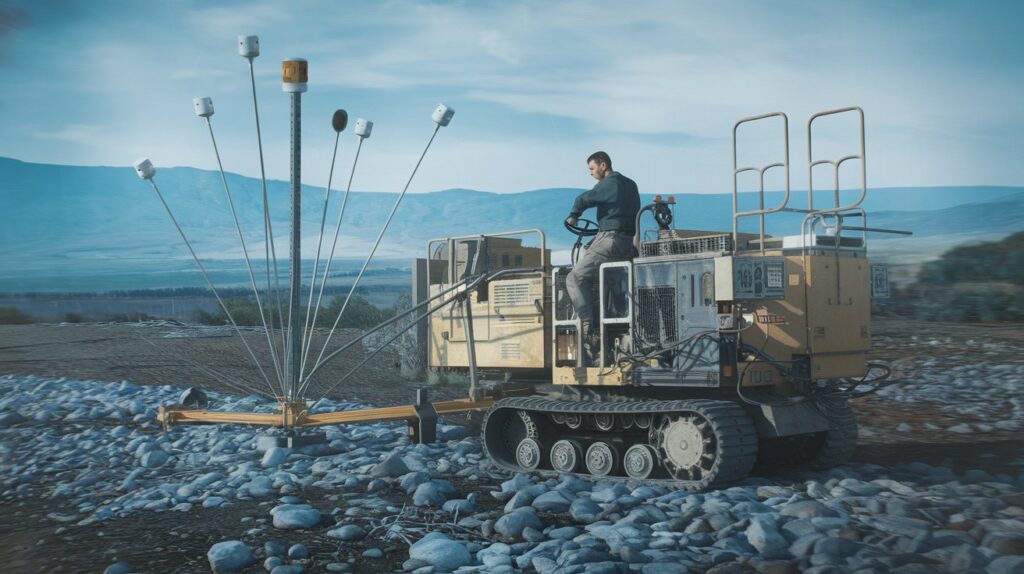
Geophysical exploration measures physical properties of rocks and minerals to detect subsurface anomalies without drilling. Magnetic surveys identify magnetic minerals like magnetite associated with certain ore types, while electromagnetic methods detect conductive sulfide mineralization. Induced polarization surveys measure how rocks store electrical charge, helping identify disseminated sulfides. Gravity surveys reveal density contrasts that may indicate massive sulfide bodies or kimberlite pipes containing diamonds. Modern airborne surveys can cover 500-1,000 square kilometers per day, with fixed-wing aircraft or helicopter-mounted sensor arrays collecting multiple geophysical datasets simultaneously. Ground-based surveys provide higher resolution data for detailed target evaluation, with typical costs ranging from $150 to $800 per line-kilometer depending on terrain and method.
Geochemical Sampling Programs
Geochemical exploration analyzes the distribution of chemical elements in rocks, soils, sediments, and water to trace mineralization patterns. Surface rock chip samples provide direct evidence of mineralization, while soil samples detect dispersion halos surrounding buried deposits. Stream sediment sampling leverages natural erosion and transport to identify upstream mineral sources across large drainage basins. In 2026, portable XRF analyzers deliver immediate multi-element analysis in the field, allowing real-time decision-making about sample density and follow-up work. Laboratory analysis using ICP-MS and ICP-AES techniques provides precise quantification of 50+ elements at detection limits measuring parts per billion. Systematic grid-based sampling programs typically collect samples every 25-100 meters, with denser spacing over high-priority targets.
Core Drilling and Sample Collection
Diamond core drilling represents the gold standard for subsurface investigation, recovering continuous cylindrical rock samples typically 47.6mm to 63.5mm in diameter from depths exceeding 2,000 meters. Core samples preserve geological relationships, structural features, and alteration patterns essential for accurate resource modeling. Drilling costs in the United States average $180-$350 per meter for conventional depths, increasing significantly for deeper holes or difficult ground conditions. Drill programs follow systematic patterns designed to test geological continuity and grade distribution, with hole spacing tightening progressively as confidence increases. Logged and photographed core undergoes systematic sampling at intervals determined by geological contacts and mineralization boundaries, with half-core retained for verification and metallurgical testing.
Claim Staking and Permitting Requirements
Securing mineral rights and obtaining necessary permits constitutes a critical legal framework that must be established before significant exploration expenditures occur. In the United States, the regulatory landscape varies significantly between federal lands, state lands, and private property, each governed by different statutes and administrative procedures. The General Mining Law of 1872, though amended multiple times, still governs hardrock mineral rights on many federal lands, while states maintain separate regulatory systems for minerals on state-owned properties.
On federal lands, companies must locate mining claims following procedures established by the Bureau of Land Management, filing claim notices and paying annual maintenance fees of $165 per claim as of 2026. State trust lands require separate lease applications with competitive bidding processes in many jurisdictions. Private land exploration necessitates negotiated access agreements or mineral lease contracts with landowners. Beyond claim staking, exploration permits address environmental protection, cultural resource preservation, water quality, and wildlife habitat. Notice-level operations for minimal surface disturbance may receive approval within 30-60 days, while plans of operation for significant drilling programs typically require 6-18 months for environmental assessment and agency review.
Resource Modeling and Estimation Techniques
Resource modeling transforms raw exploration data into three-dimensional representations of mineral deposit geometry, grade distribution, and tonnage estimates that inform economic decisions. Modern modeling employs sophisticated geostatistical techniques and specialized software platforms that integrate geological interpretations with assay data from thousands of samples. The accuracy and confidence of resource estimates directly impact project valuation, financing decisions, and mine planning strategies.
Geologists create wireframe models defining mineralized zones based on grade thresholds, geological boundaries, or alteration envelopes. Block models subdivide deposits into regular three-dimensional cells, typically 5-25 meters on each side, with each block assigned estimated grades for target elements. Geostatistical methods including ordinary kriging, inverse distance weighting, and nearest neighbor algorithms interpolate grade values between sample points while accounting for spatial continuity patterns revealed by variogram analysis. In 2026, United States resource estimates must classify mineralized material into measured, indicated, and inferred categories based on sample spacing and geological confidence levels. Qualified persons must validate estimates following recognized standards, with typical measured resources requiring drill spacing of 25-50 meters, indicated resources at 50-100 meters, and inferred resources at 100-200 meters or greater.
Mining Exploration vs Mining Exploitation
Understanding the distinction between exploration and exploitation clarifies the different objectives, risks, and economic characteristics of these sequential mining phases. While often confused, these activities serve fundamentally different purposes in the mining value chain and require distinct skill sets, capital structures, and regulatory frameworks. The transition from exploration to exploitation represents a critical decision point that commits substantially greater resources based on exploration findings.
Mining exploration focuses on discovery, delineation, and economic assessment of mineral deposits, characterized by high technical risk but relatively modest capital requirements. Exploration projects may investigate multiple prospects simultaneously, abandoning uneconomic targets while advancing promising discoveries. Success rates vary by commodity and geological setting, with approximately 1 in 1,000 early-stage prospects ultimately becoming operating mines. By contrast, mining exploitation or extraction involves the physical removal, processing, and sale of ore from proven deposits, requiring capital investments from $50 million for small operations to over $5 billion for major projects. Exploitation assumes geological risk has been largely eliminated through thorough exploration, shifting focus to operational efficiency, cost control, and market optimization. In 2026, the United States hosts approximately 280 active exploration projects for every producing mine, illustrating the winnowing process from discovery to production.
Top Mining Exploration Companies in the United States
The United States exploration sector comprises major mining corporations, dedicated junior exploration companies, and mid-tier developers, each playing distinct roles in the discovery ecosystem. Major companies including Newmont Corporation, Freeport-McMoRan, and Rio Tinto maintain substantial exploration budgets exceeding $100 million annually, focusing on large-scale discoveries near existing operations or in proven mining districts. These industry leaders leverage extensive technical expertise, established infrastructure, and strong balance sheets to advance complex projects through all exploration stages.
Junior exploration companies drive grassroots discovery efforts, employing innovative approaches and risk-tolerant capital to test early-stage concepts that major companies often avoid. Notable United States-focused juniors include Perpetua Resources exploring gold-antimony deposits in Idaho, enCore Energy advancing uranium projects across multiple states, and Defense Metals pursuing rare earth elements in Montana. These companies typically raise capital through equity markets, with exploration budgets ranging from $500,000 to $15 million annually. Partnership models have gained prominence in 2026, with juniors generating discoveries and majors providing development capital through earn-in agreements, option payments, or joint ventures. This symbiotic relationship efficiently allocates risk and capital across the exploration spectrum, with juniors focusing on discovery creativity and majors contributing development expertise and financial strength.
Mining Exploration Jobs and Career Paths
Exploration careers offer diverse opportunities across geological, geophysical, geochemical, and support disciplines, with compensation reflecting technical expertise and experience levels. Entry-level field geologists in the United States earn $65,000-$85,000 annually, while senior exploration geologists with 10+ years experience command $120,000-$180,000 plus performance bonuses. Project managers and chief geologists at major companies can exceed $200,000 in total compensation. The sector employs approximately 18,500 exploration professionals across the United States as of 2026, with demand particularly strong for specialists in critical mineral deposits including lithium, rare earths, and battery metals.
Career paths typically begin with field geology positions involving core logging, sample collection, data compilation, and basic geological mapping. Advancement opportunities progress through senior geologist roles with target generation responsibilities, project management positions overseeing multi-disciplinary teams, and eventually corporate positions directing regional or company-wide exploration strategies. Related disciplines include geophysical exploration specialists interpreting survey data, geochemists managing analytical programs, GIS technicians creating spatial databases, and environmental professionals ensuring regulatory compliance. Many exploration professionals alternate between major companies offering stability and junior companies providing broader responsibility and equity incentives. Educational requirements typically include bachelor’s degrees in geology or related earth sciences, with master’s degrees increasingly preferred for advancement. Professional registration as a Licensed Geologist or Certified Professional Geologist enhances credibility and career prospects, particularly for roles requiring resource estimate validation or regulatory interaction.
Critical Minerals Exploration in 2026
The United States government has designated 50 mineral commodities as critical minerals essential for economic security and national defense, driving focused exploration efforts for these strategic materials. The 2026 critical minerals list includes lithium, cobalt, nickel, rare earth elements, graphite, manganese, and numerous others vital for clean energy technologies, defense applications, and advanced manufacturing. Federal initiatives including the Defense Production Act Title III investments and Department of Energy grants have channeled over $840 million into domestic critical mineral exploration and development since 2022.
Lithium exploration has intensified across Nevada, North Carolina, and Arkansas, targeting both hard rock pegmatite deposits and sedimentary brine resources. Rare earth element projects in Wyoming, Montana, and Alaska seek to reduce dependence on foreign sources currently supplying 80% of United States consumption. Cobalt and nickel exploration focuses on magmatic sulfide deposits in Minnesota and Montana, while graphite projects advance in Alaska and Alabama. Government support includes streamlined permitting initiatives, geological survey mapping programs, and research funding for extraction technologies. The USGS Earth Mapping Resources Initiative has completed high-resolution geophysical and geochemical surveys covering 25% of prospective United States terrain, with data freely available to stimulate exploration investment. These coordinated efforts aim to establish resilient domestic supply chains for minerals that underpin economic competitiveness and technological leadership.
De-Risking Exploration Projects
Risk reduction strategies systematically address geological, technical, financial, and permitting uncertainties that could derail exploration projects or diminish economic returns. Effective de-risking employs staged investment approaches that test critical assumptions before committing major capital, allowing projects to be redirected or terminated based on emerging evidence. The goal is progressing only those projects with highest probability of technical and commercial success while minimizing expenditures on prospects unlikely to achieve development thresholds.
Geological de-risking involves progressively tighter drill spacing to increase resource confidence levels from inferred to indicated to measured categories, with corresponding reductions in grade and tonnage uncertainty. Metallurgical testing on representative samples confirms that target minerals can be efficiently recovered using established or innovative processing methods, establishing realistic recovery rates and operating costs. Environmental baseline studies identify sensitive receptors, establish pre-mining conditions, and inform mitigation strategies, reducing permit approval timelines and regulatory challenges. Community engagement programs build social license through transparent communication, local employment commitments, and benefit-sharing agreements that align stakeholder interests. Financial de-risking diversifies funding sources, secures commodity off-take agreements, and obtains governmental grants or loan guarantees that reduce capital costs. Leading companies employ stage-gate processes requiring explicit management approval before advancing between exploration phases, with rigorous technical and economic reviews eliminating marginal projects early. This disciplined approach concentrates resources on the highest-quality opportunities while maintaining optionality across a portfolio of prospects at different maturity levels.
Making the Production Decision
The production decision represents the culmination of exploration efforts, occurring when a company commits to mine construction based on demonstrated technical feasibility and acceptable economic returns. This irreversible commitment typically requires board-level approval supported by completed feasibility studies, secured financing, obtained permits, and favorable commodity price outlooks. The decision converts a mineral resource into a mining asset, triggering capital expenditures that may reach billions of dollars for large-scale projects.
Decision criteria extend beyond simple net present value calculations to encompass strategic fit with corporate capabilities, portfolio balance, jurisdictional risk, environmental stewardship commitments, and social sustainability considerations. Financial metrics typically require internal rates of return exceeding 15-20% at conservative commodity price assumptions, with payback periods under 5-7 years preferred. Sensitivity analyses test project resilience against commodity price fluctuations, capital cost overruns, and operating cost variations. Production decisions in 2026 increasingly emphasize carbon footprint minimization, water conservation, biodiversity protection, and circular economy principles that facilitate permitting and market acceptance. Major United States mining projects advancing to production currently average 7-12 years from discovery to first ore, with permitting alone consuming 3-5 years of this timeline. Companies that maintain strong stakeholder relationships, demonstrate technical competence, and secure early funding commitments significantly improve their probability of successfully transitioning from exploration to production status.
Related video about mining exploration
This video complements the article information with a practical visual demonstration.
Questions & Answers
What is mining exploration?
Mining exploration is the systematic process of searching for and evaluating mineral deposits beneath the Earth’s surface to determine their economic viability. This multi-stage process combines geological mapping, geochemical sampling, geophysical surveys, and drilling to locate, define, and assess potential mining sites. Exploration activities range from regional reconnaissance covering thousands of square miles to detailed drilling programs that define specific deposit dimensions, mineral grades, and tonnage estimates. The process aims to reduce geological uncertainty and provide sufficient technical data to support mine development decisions.
What are the four stages of exploration?
The four stages of mineral exploration include reconnaissance, prospecting, detailed exploration, and pre-development. Reconnaissance involves regional surveys identifying prospective geological areas using satellite imagery and existing data. Prospecting conducts ground investigations with geological mapping and sampling to generate specific targets. Detailed exploration employs systematic drilling to define three-dimensional deposit geometry and grade distribution. Pre-development completes feasibility studies assessing technical viability, economic returns, and permitting requirements before mine construction decisions. Each stage requires progressively greater investment, with costs escalating from tens of thousands to tens of millions of dollars.
What is exploratory mining?
Exploratory mining, more accurately termed exploration drilling or bulk sampling, refers to extracting small volumes of mineralized material during advanced exploration stages to test metallurgical properties and confirm grade estimates. This differs from exploration, which focuses on discovery and assessment, and production mining, which extracts ore commercially. Exploratory underground workings may include adits, shafts, or small-scale trenching that provide access for detailed sampling and geological observation. These activities help validate resource models and processing assumptions before committing to full-scale mine development, reducing technical risk for subsequent production decisions.
What is mining exploitation?
Mining exploitation, also called mineral extraction or ore production, is the physical process of removing economically valuable minerals from the Earth and processing them into marketable products. This follows successful exploration that has identified and delineated viable mineral deposits. Exploitation encompasses mine development, ore extraction through underground or open-pit methods, mineral processing in concentrators or refineries, and waste management. Unlike exploration which carries high geological risk with modest capital needs, exploitation requires substantial capital investment ranging from tens of millions to billions of dollars but operates with significantly reduced geological uncertainty based on thorough exploration and feasibility studies.
How long does mining exploration take?
Mining exploration timelines vary significantly based on deposit complexity, exploration stage, and funding availability, typically ranging from 3-15 years from initial reconnaissance to production decision. Early-stage reconnaissance and prospecting may span 1-3 years, while detailed drilling programs require 2-5 years to achieve measured and indicated resource categories. Advanced exploration including feasibility studies typically adds another 2-4 years. In the United States, major mining projects average 7-12 years from discovery to first production, with permitting processes alone consuming 3-5 years. Adequate funding, favorable geology, and efficient regulatory processes can compress timelines, while complex deposits or permitting challenges may extend them considerably.
How much does mining exploration cost?
Exploration costs escalate dramatically through successive project stages, from $50,000-$200,000 for initial reconnaissance to $15-$150 million for advanced feasibility studies. Early prospecting typically requires $300,000-$1.5 million, while detailed drilling programs cost $3-$25 million depending on target depth and complexity. In 2026, drilling represents the largest single expense at $180-$350 per meter in the United States for standard diamond core drilling. Total expenditures from grassroots discovery through bankable feasibility study commonly reach $30-$100 million for major deposits. Junior exploration companies often spend $1-$5 million annually across multiple projects, while major mining companies allocate $50-$200 million yearly to exploration programs across global portfolios.
| Exploration Stage | Primary Activities | Typical Investment | Timeline |
|---|---|---|---|
| Reconnaissance | Regional surveys, satellite imagery analysis, geological database review | $50,000 – $200,000 | 6-12 months |
| Prospecting | Geological mapping, geochemical sampling, geophysical surveys | $300,000 – $1.5 million | 1-2 years |
| Detailed Exploration | Systematic drilling, resource modeling, preliminary assessments | $3 – $25 million | 2-5 years |
| Pre-Development | Feasibility studies, metallurgical testing, permitting, engineering | $15 – $150 million | 2-5 years |
| Total Discovery to Production | Complete exploration cycle through construction decision | $30 – $200 million | 7-15 years |